


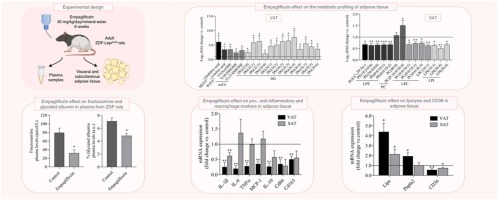
The lipidomic and inflammatory profiles of visceral and subcutaneous adipose tissues are distinctly regulated by the SGLT2 inhibitor empagliflozin in Zucker diabetic fatty rats
Source : https://www.sciencedirect.com/science/article/pii/S0753332223003232?via=ihub
Empagliflozin distinctly modulates the lipidome of rat white adipose tissue depots. * This drug induces a strong anti-inflammatory effect in rat visceral fat. * Empagliflozin reduces M1 and M2 macrophage...
Conclusions/Relevance: Our data highlighted differences in the VAT and SAT lipidomes, inflammatory profiles and lipolytic function, which suggest a distinct metabolism of these two white adipose tissue depots after the empagliflozin treatment.

GLP-1/GIP analogues: potential impact in the landscape of obesity pharmacotherapy - PubMed
Source : https://pubmed.ncbi.nlm.nih.gov/36927378/
The .gov means it's official. Federal government websites often end in .gov or .mil. Before sharing sensitive information, make sure you're on a federal government site. The site is secure....
Expert Opinion: GLP-1R mimetics are often discontinued within 24-months, owing to gastrointestinal side-effects, meaning long-term application of these agents in obesity is questioned. Combined GIPR/GLP-1R agonism appears to induce fewer side-effects, indicating GLP-1R/GIPR co-agonists may be more suitable for enduring obesity management....
Effect of Various Dosing Schedules on the Pharmacokinetics of Oral Semaglutide: A Randomised Trial in Healthy Subjects - Clinical Pharmacokinetics
Source : https://link.springer.com/article/10.1007/s40262-023-01223-9
Background Prescribing information instructs taking oral semaglutide (a glucagon-like peptide-1 analogue) in the fasting state, followed by a post-dose fasting period of ≥ 30 min. This trial compared the recommended dosing...
Conclusion: This trial supports dosing oral semaglutide in accordance with prescribing information, which requires dosing in the fasting state.
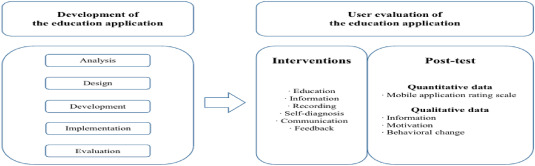
User evaluation of a mobile education application for the management of metabolic syndrome among cancer survivors
Source : https://www.ejoncologynursing.com/article/S1462-3889(23)00010-8/fulltext
Both cancer survivors and oncology nurse specialists scored the area of functionality as the highest. * Both cancer survivors and oncology nurse specialists scored the area of engagement as the...
Conclusions: Metabolic syndrome in cancer survivors can be effectively managed by using the educational application developed in this study by improving the shortcomings of the app for cancer survivors.

Glucagon-Like Peptide 1 Receptor Agonists Versus Sodium-Glucose Cotransporter 2 Inhibitors for Atherosclerotic Cardiovascular Disease in Patients With Type 2 Diabetes | Yanai | Cardiology Research
Source : https://cardiologyres.org/index.php/Cardiologyres/article/view/1459
Hidekatsu Yanai, Hiroki Adachi, Mariko Hakoshima, Hisayuki Katsuyama Abstract Beyond improving hemoglobin A1c (HbA1c) in adults with type 2 diabetes, glucagon-like peptide 1 receptor agonists (GLP-1RA) have been approved for...
Conclusions/Relevance: Compared with SGLT2i, GLP-1RA had a higher probability of decreasing serum triglyceride. GLP-1RA have multiple vascular biological anti-atherogenic properties.