

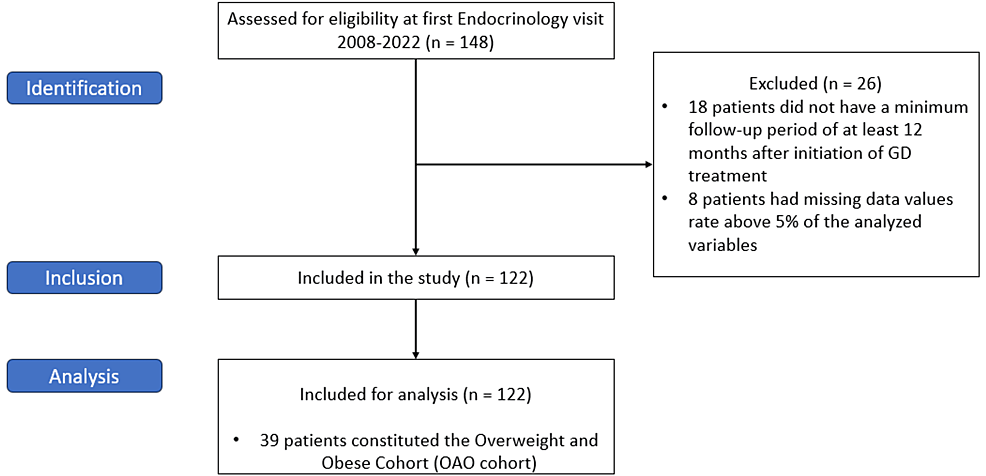
Exploring Post-Treatment Weight Changes in Overweight and Obese Patients With Graves’ Disease: a Retrospective Analysis
Introduction: Graves' disease (GD) is associated with primary hyperthyroidism, leading to weight loss before treatment. During the treatment, weight gain is frequently observed, often surpassing the initial weight loss. This...
After treatment, ≈60% of individuals encountered weight gain, exhibiting a higher prevalence among women and those undergoing definitive treatment modalities.
Share




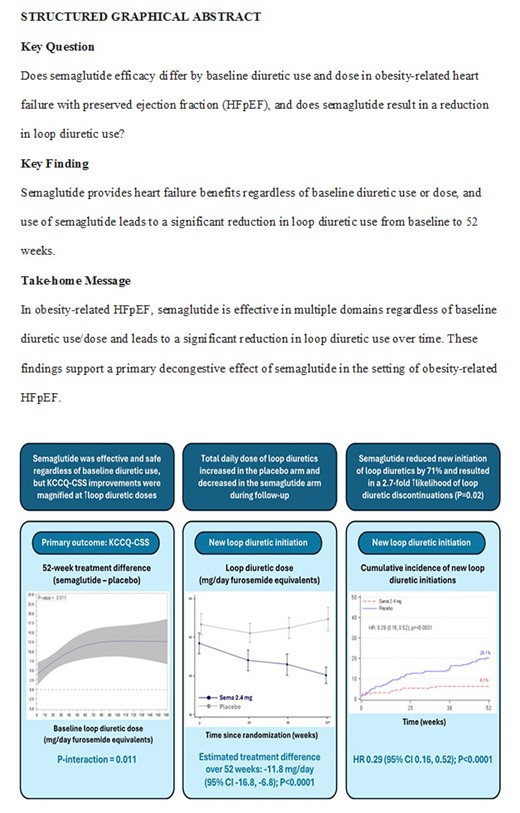
Semaglutide and Diuretic Use in Obesity-Related Heart Failure With Preserved Ejection Fraction: a Pooled Analysis of the STEP-HFpEF and STEP-HFpEF-DM Trials
Source : https://academic.oup.com/eurheartj/advance-article/doi/10.1093/eurheartj/ehae322/7670783?login=false
AbstractBackground and Aims. In the STEP-HFpEF trial program, treatment with semaglutide resulted in multiple beneficial effects in patients with obesity-r
In obesity-related HF with preserved ejection fraction, semaglutide was effective in multiple domains, regardless of baseline diuretic use/dose, and let to a significant reduction in loop diuretic use over time.
Share
Endoscopic sleeve gastroplasty is cost saving compared with semaglutide in the treatment of class 2 obesity.
Share

A composite proportion of patients had a clinically meaningful change, comprising a reduction in BMI Z score of ≥0.2 points for patients aged <18 years and reduction in bodyweight of ≥5% for patients aged ≥18 years.
Share

Hedonic Hunger, Eating Behavior, and Food Reward and Preferences 1 Year After Initial Weight Loss by Diet or Bariatric Surgery
Source : https://pubmed.ncbi.nlm.nih.gov/38653583/
Continued WL with bariatric surgery is paralleled by favorable changes in eating behavior and food reward and preferences. By contrast, controls experienced weight regain at 1Y follow-up and no changes...
Decreases in emotional eating, hunger, disinhibition, and food reward and increases in dietary restraint were seen at 1 year of follow-up in the bariatric-surgery groups alone.
Share