micro-community-banner
Profile Image
  • Saved
Obesity treatment resources

A number of organizations recognize obesity as a chronic, relapsing, progressive disease, yet only a small percentage of patients can achieve their goals and maintain weight loss. Comprehensive care for obesity may involve energy deficit meal plans, physical activity, behavioral modification, consideration of circadian rhythms, and anti-obesity medications. However, providers may have limited time to engage in these and many report the need for more training.

What percent of your obese and overweight patients mention efforts to lose weight?
What resources (for patients or providers) have you found particularly useful in helping patients lose weight and maintain weight loss — or what additional ones would you like to see?

Profile Image

Show More Comments

  • Saved
Association Between Childhood Obesity and Infertility in Later Life: A Systematic Review of Cohort Studies

Association Between Childhood Obesity and Infertility in Later Life: A Systematic Review of Cohort Studies

Source : https://bmcendocrdisord.biomedcentral.com/articles/10.1186/s12902-023-01490-4

Background The global prevalence of childhood obesity has exhibited a troubling surge in recent years. Due to the raised questions regarding its potential correlation with infertility in adulthood, this systematic...

The evidence suggests a positive association between childhood obesity with infertility indicators in later life. Childhood weight reduction strategies are suggested to be implemented in societies in order to reduce infertility rates in later life.

Profile Image
  • Saved
Endocrine, Genetic, and Microbiome Nexus of Obesity and Potential Role of Postbiotics: A Narrative Review

Endocrine, Genetic, and Microbiome Nexus of Obesity and Potential Role of Postbiotics: A Narrative Review

Source : https://link.springer.com/article/10.1007/s40519-023-01593-w

Obesity is a public health crisis, presenting a huge burden on health care and the economic system in both developed and developing countries. According to the WHO's latest report on...

Postbiotics such as the SCFAs suppress obesity by regulating metabolic hormones such as GLP-1, and PPY thus reducing feed intake and suppressing appetite. Furthermore, muramyl di-peptides, bacteriocins, and LPS have been tested against obesity and yielded promising results in both human and mice studies.

Profile Image
  • Saved
A Narrative Review of Approved and Emerging Anti-Obesity Medications

A Narrative Review of Approved and Emerging Anti-Obesity Medications

Source : https://www.sciencedirect.com/science/article/pii/S1319016423002529

Recently, many drugs have been approved for halting overweight and obesity-few types of research shifted to using Anti-obesity medications (AOM) solel...

The use of AOM increased enormously despite its sometimes-dubious safety and ineffectiveness. The public and medical professionals should be vigilant to the real-world benefits of anti-obesity drugs and their achieved effectiveness with an improved safety profile.

Profile Image
  • Saved

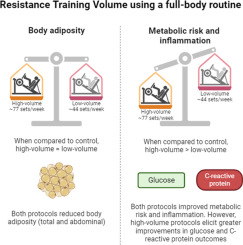
Compared with CG, HVRT protocols elicit greater improvements in metabolic risk and inflammation outcomes than LVRT in overweight/obese postmenopausal and older females.

Profile Image