

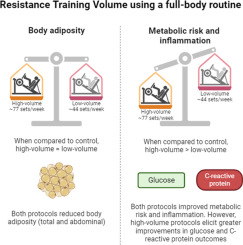
Effect of High-Intensity Interval Training Compared to Moderate-Intensity Continuous Training on Body Composition and Insulin Sensitivity in Overweight and Obese Adults: a Systematic Review and Meta-Analysis
Source : https://www.sciencedirect.com/science/article/pii/S2095254623000972
This meta-analytical study explored the effects of resistance training (RT) volume on body adiposity, metabolic risk, and inflammation in postmenopaus...
Compared with CG, HVRT protocols elicit greater improvements in metabolic risk and inflammation outcomes than LVRT in overweight/obese postmenopausal and older females.
Share





Proportion of Participants With Type 2 Diabetes Achieving a Metabolic Composite Endpoint With Once-Weekly Semaglutide Treatment Versus Comparators: Post Hoc Pooled Analysis From SUSTAIN 1-5, 7-10 and SUSTAIN China
Source : https://pubmed.ncbi.nlm.nih.gov/37822270/
Treatment with OW SC semaglutide versus comparators was associated with increased proportions of participants with T2D meeting the composite metabolic endpoint.
Treatment with OW SC semaglutide versus comparators was associated with increased proportions of participants with T2D meeting the composite metabolic endpoint.
Share
The findings indicate that among the 4 antiobesity drugs currently available for pediatric use, phentermine-topiramate was the most cost-effective option to treat adolescents with severe obesity.
Share

Glucose-Lowering Effects of Semaglutide Compared With Dulaglutide Using Professional Continuous Glucose Monitoring in Outpatients With Type 2 Diabetes Mellitus: a Pilot Study
Source : https://pubmed.ncbi.nlm.nih.gov/37781464/
The online version contains supplementary material available at 10.1007/s13340-023-00640-2.
Switching from 0.75 mg DG to 0.5 mg SG in patients with T2DM improved glycemic variability, mean glycemic index, and daily variability without increasing the hypoglycemic index. The results suggest that switching to SG may be a useful option in patients experiencing inadequate glycemic control with DG.
Share
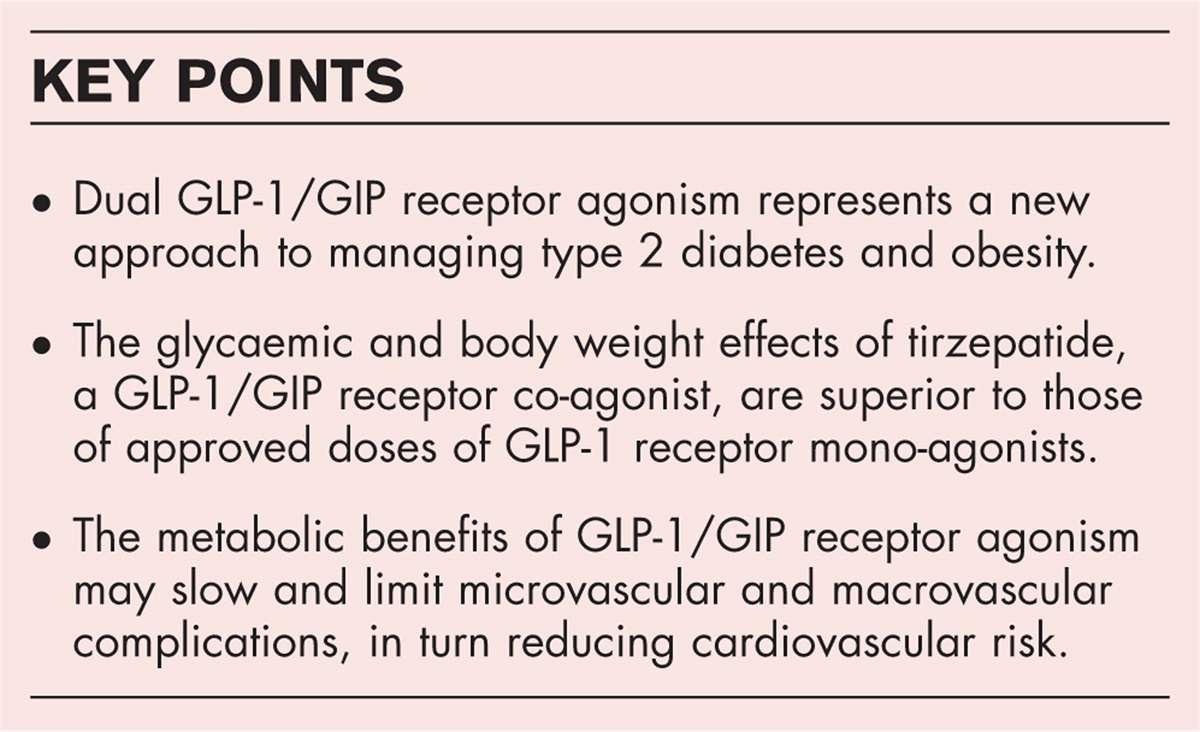
Glucagon-Like Peptide-1/Glucose-Dependent Insulinotropic Polypeptide Receptor Co-Agonists for Cardioprotection, Type 2 Diabetes and Obesity: a Review of Mechanisms and Clinical Data
GIP receptor co-agonists are in development to capitalize on the synergism of GLP-1 and GIP agonism. We review the mechanisms of action and clinical data for GLP-1/GIP receptor co-agonists in...
GLP-1/GIP receptor co-agonists are a novel addition to the diabetes and obesity armamentarium. The cardiorenal-metabolic benefits position them as promising multiprong tools for metabolically complex individuals with chronic vascular complications.
Share