
PCSK9, a novel immune and ferroptosis related gene in abdominal aortic aneurysm neck - Scientific Reports
Source : https://www.nature.com/articles/s41598-023-33287-9
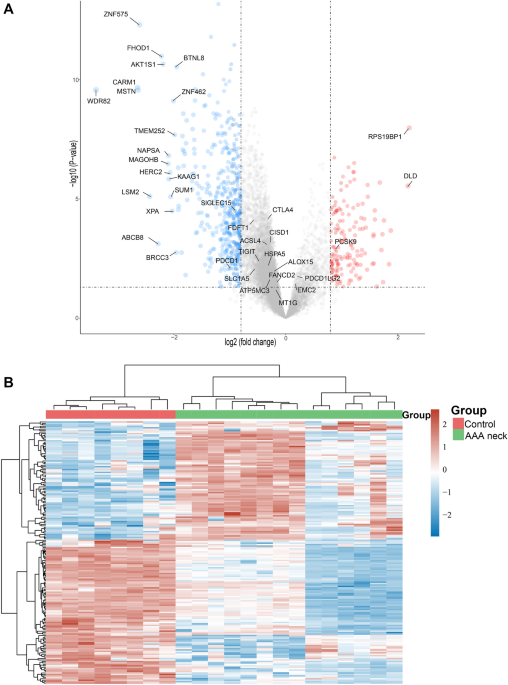
The gene expression profile of abdominal aortic aneurysm (AAA) neck is not fully understood. The etiology of AAA is considered to be related to atherosclerosis and the inflammatory response, involving...
Conclusion: PCSK9 was highly expressed in AAA neck, and may exert its role through interacting with immune check-points and ferroptosis-related genes.
Share




-
 Lipid Management Connect2yrKey Points • Source: Scientific Reports • Conclusion: “PCSK9 was highly expressed in AAA [abdominal aortic aneurysm] neck, and may exert its role through interacting with immune check-points and ferroptosis-related genes …. We found Show More

PCSK9 inhibitor attenuates atherosclerosis by regulating SNHG16/EZH2/TRAF5-mediated VSMC proliferation, migration, and foam cell formation - PubMed
Source : https://pubmed.ncbi.nlm.nih.gov/37017413/
The .gov means it's official. Federal government websites often end in .gov or .mil. Before sharing sensitive information, make sure you're on a federal government site. The site is secure....
Conclusions/Relevance: The protective regulation of PCSK9 inhibitor was observed both in high-fat diet (HFD)-fed mice and oxidized low-density lipoprotein (ox-LDL)-treated VSMC, as manifested in the decreased the atherosclerotic lesions in vivo, as well as the weakened cell proliferation, migration, and formation of foam cells in vitro....
Share
The cholesterol-lowering effect of statins is modified by LILRB5 intolerance genotype: Results from a recruit-by-genotype clinical trial
Source : https://www.frontiersin.org/articles/10.3389/fphar.2023.1090010/full
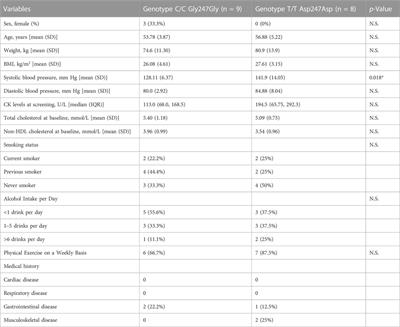
Background/Aims: Statin intolerance leads to poor adherence to statin therapy, resulting in a failure to achieve desired cholesterol reduction and adverse outcomes. The LILRB5 Asp247Gly genotype has been identified as...
Conclusion: The Asp247Gly variant in LILRB5, previously associated with statin intolerance, was associated with differential increases in creatine kinase and total cholesterol and non-HDL cholesterol-lowering response to atorvastatin. Taken together, these results suggest that this variant could have utility in precision cardiovascular...
Share

The N-Acetylgalactosamine-conjugated small interfering RNA inclisiran can be coadministered safely with atorvastatin in cynomolgus monkeys resulting in additive low-density lipoprotein cholesterol reductions - PubMed
Source : https://pubmed.ncbi.nlm.nih.gov/37021909/
Inclisiran, a small interfering RNA, selectively inhibits proprotein convertase subtilisin/kexin type 9 (PCSK9) synthesis in the liver and has been shown to reduce low-density lipoprotein cholesterol (LDL-C) by ≥50% in...
Summary: Inclisiran significantly inhibited PCSK9 synthesis and decreased LDL-C in cynomolgus monkeys without increasing the risk of adverse effects when coadministered with atorvastatin.
Share

Effect of Different Types and Dosages of Proprotein Convertase Subtilisin/Kexin Type 9 Inhibitors on Lipoprotein(a) Levels: A Network Meta-Analysis
on Lp(a) have not been studied in detail. These include two monoclonal antibodies, alirocumab and evolocumab, and inclisiran, a small interfering RNA. We searched PubMed, Web of Science, Embase, and...
Conclusions/Relevance: Therefore, for patients with very high Lp(a) levels who remain at high residual risk in the context of statin administration, it may be acceptable to use a kind of PCSK9 inhibitor, but the clinical benefit needs further investigation.
Share