

Recent Advances in Gene Therapy for Familial Hypercholesterolemia: An Update Review - PubMed
Source : https://pubmed.ncbi.nlm.nih.gov/36431249/
(1) Background: Existing lipid-lowering therapies have difficulty in achieving lipid target levels in patients with familial hypercholesterolemia (FH), especially in the treatment of patients with homozygous familial hypercholesterolemia. (2) Method:...
Conclusion: Gene therapy is being widely used for the lipid-lowering treatment of FH patients and has shown excellent therapeutic promise, but the current delivery efficiency, economic burden, immunogenicity and the precision of gene therapy can be further optimized.
Share





Cardiovascular Risk Profile and Lipid Management in the Population-Based Cohort Study LATINO: 20 Years of Real-World Data - PubMed
Source : https://pubmed.ncbi.nlm.nih.gov/36431309/
The rising prevalence of cardiovascular (CV) risk factors in Portugal has translated into more than 35,000 annual deaths due to CV diseases. We performed a multicenter observational cohort study encompassing...
Conclusions/Relevance: There are clear opportunities to optimize LDL-C management in routine clinical practice. The prescription of LLT according to CV risk represents an important missed treatment opportunity.
Share
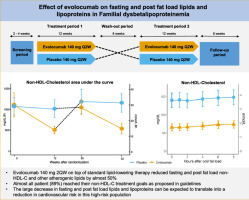
Effect of evolocumab on fasting and post fat load lipids and lipoproteins in familial dysbetalipoproteinemia
Source : https://www.lipidjournal.com/article/S1933-2874(22)00291-4/fulltext
Familial dysbetalipoproteinemia (FD), also known as 'remnant removal disease', is the second most common monogenic lipid disorder after heterozygous familial hypercholesterolemia (heFH), with an estimated prevalence of 1 in 850...
Conclusions: Evolocumab added to standard lipid-lowering therapy significantly reduced fasting and absolute post fat load concentrations of non-HDL-C, apoB and other atherogenic lipids and lipoproteins in FD patients. The clinically significant decrease in lipids and lipoproteins can be expected to translate into a reduction in CVD risk in...
Share
-
 Lipid Management Connect3yrKey Takeaways • Source: Journal of Clinical Lipidology • Conclusion: “Evolocumab added to standard lipid-lowering therapy significantly reduced fasting and absolute post fat load concentrations of non-HDL-C, apoB and other atherogenic lipids and lipoproteins Show More
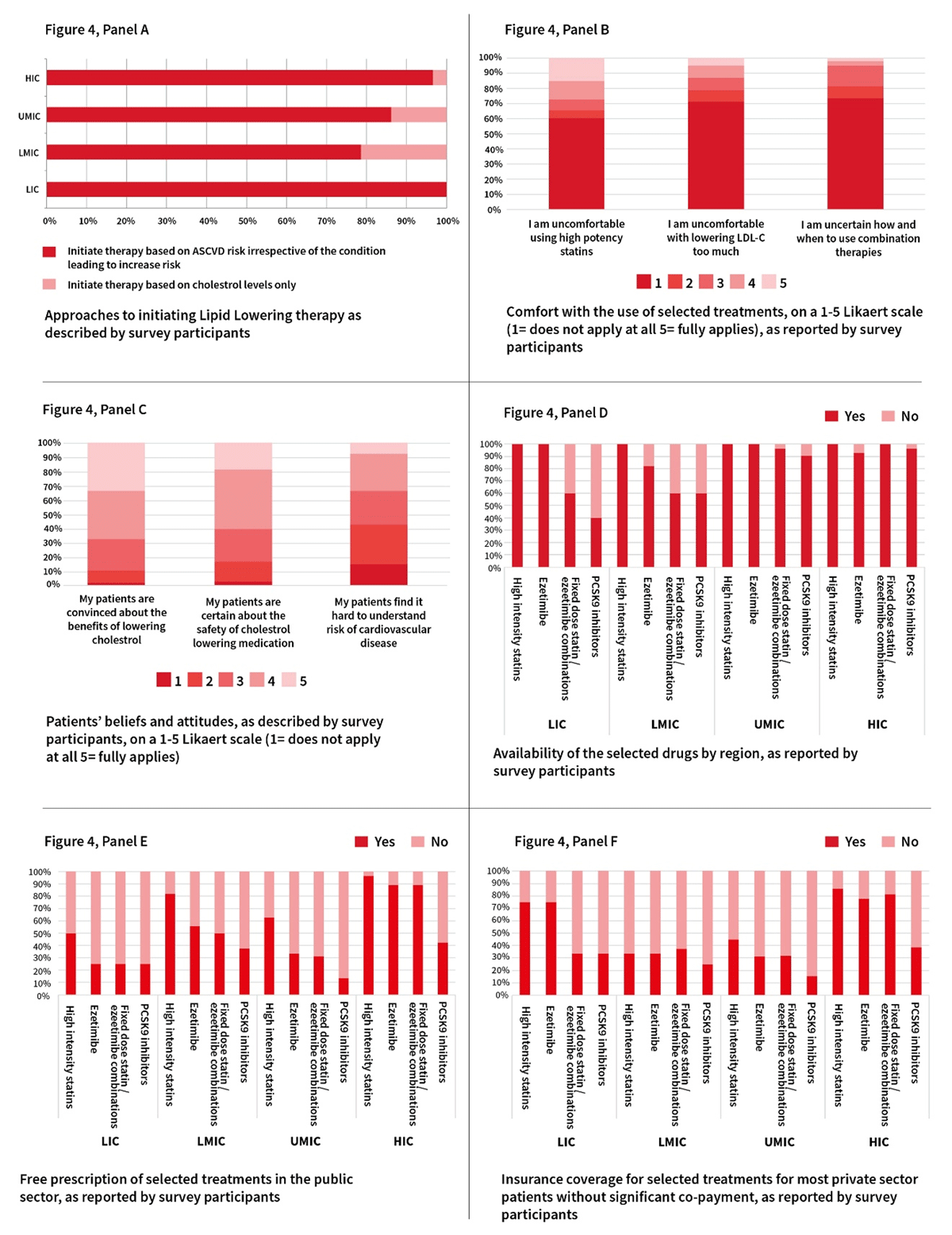
World Heart Federation Cholesterol Roadmap 2022
Source : https://globalheartjournal.com/article/10.5334/gh.1154/
Atherosclerotic cardiovascular disease (ASCVD) remains the leading cause of death globally despite major advances in our understanding of the pathophysiology of atherosclerosis, its consequences and the development of new preventive...
Conclusions: The adverse effects of LDL-cholesterol and apo B containing lipoprotein exposure are cumulative and result in ASCVD. These are preventable by implementation of different strategies, aimed at efficiently tackling atherosclerosis at different stages throughout the human life-course. Preventive strategies should therefore be updated...
Share
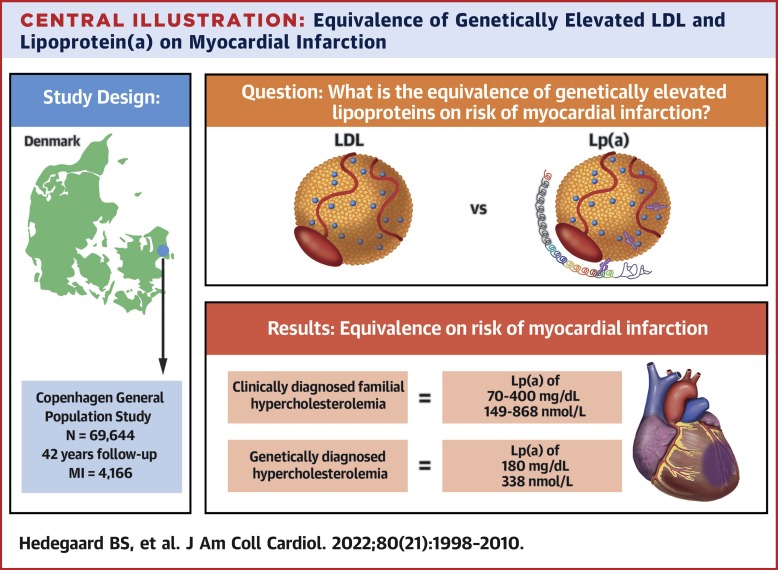
Equivalent Impact of Elevated Lipoprotein(a) and Familial Hypercholesterolemia in Patients With Atherosclerotic Cardiovascular Disease
Source : https://www.sciencedirect.com/science/article/abs/pii/S0735109722069546?via=ihub
Genetically elevated plasma lipoprotein(a) and familial hypercholesterolemia each result in premature atherosclerotic cardiovascular disease (ASCVD); however, a direct comparison in the same population is needed of these 2 genetic traits...
Conclusions: Lipoprotein(a) levels equivalent to LDL cholesterol in clinical and genetic familial hypercholesterolemia were 67 to 402 mg/dL and 180 mg/dL, respectively, for myocardial infarction and 130 to 391 mg/dL and 175 mg/dL, respectively, for ASCVD.
Share