

Paediatric patients with heterozygous familial hypercholesterolaemia treated with evolocumab for 80 weeks (HAUSER-OLE): a single-arm, multicentre, open-label extension of HAUSER-RCT
Source : https://www.thelancet.com/journals/landia/article/PIIS2213-8587(22)00221-2/fulltext
After 80 weeks of treatment, evolocumab was safe, well tolerated, and led to sustained reductions in LDL cholesterol in paediatric patients with heterozygous familial hypercholesterolaemia. When lipid goals cannot be...
Conclusions: Interpretation: After 80 weeks of treatment, evolocumab was safe, well tolerated, and led to sustained reductions in LDL cholesterol in paediatric patients with heterozygous familial hypercholesterolaemia. When lipid goals cannot be achieved with conventional treatments, evolocumab is an effective add-on therapy in paediatric...
Share





Drug-drug interactions between direct-acting antivirals and co-medications: a territory-wide cohort study - PubMed
Source : https://pubmed.ncbi.nlm.nih.gov/36074319/
The commonest co-medications leading to contraindication during DAA treatment were statins and antipsychotics. Category 2 and 3 DDIs are often managed by appropriate dose adjustments or temporary discontinuation of relevant...
Conclusions: The commonest co-medications leading to contraindication during DAA treatment were statins and antipsychotics. Category 2 and 3 DDIs are often managed by appropriate dose adjustments or temporary discontinuation of relevant co-medications. Careful assessment for potential DDI before DAA use is mandatory to avoid potential harmful...
Share
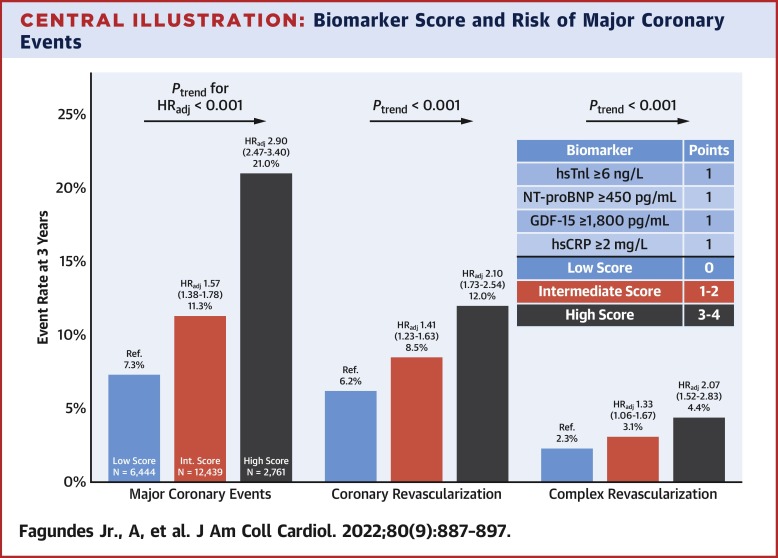
Biomarker Prediction of Complex Coronary Revascularization Procedures in the FOURIER Trial
Source : https://www.sciencedirect.com/science/article/abs/pii/S0735109722054225?via=ihub
Biomarkers are known to predict major adverse cardiovascular events. However, the association of biomarkers with complex procedures or high-risk coronary anatomy at the time of coronary revascularization revascularization is not...
/>
Conclusions: A biomarker-based strategy identifies stable patients at risk for coronary events, including coronary artery bypass graft surgery and complex percutaneous coronary intervention, and predicts high-risk coronary anatomy at the time of revascularization. These findings provide insight into the relationships between cardiovascular...
Share

Impact of sodium glucose cotransporter-2 inhibitors on liver steatosis/fibrosis/inflammation and redox balance in non-alcoholic fatty liver disease
Source : https://www.ncbi.nlm.nih.gov/pmc/articles/PMC9331534/
Sodium glucose cotransporter-2 inhibitors (SGLT2-I) are the most recently approved drugs for type 2 diabetes (T2D). Recent clinical trials of these compounds reported beneficial cardiovascular (CV) and renal outcomes. A...
Conclusion/Relevance: This result indicate a significant association between the use of evolocumab and a reduction in the incidence of CI-AKI.The logistic regression analysis results revealed that evolocumab was significantly associated with CI-AKI. The use of PCSK9 inhibitors, hydration therapy, and statin administration appears promising for...
Share

STATINS, BUT NOT PCSK9 INHIBITORS, REDUCE THE ADIPOKINE CHEMERIN IN FAMILIAL HYPERCHOLESTEROLEMIA: FOCUS ON LIPOPROTEIN SUBFRACTIONS - PubMed
Source : https://pubmed.ncbi.nlm.nih.gov/36027428/
1 Erasmus MC, Division of Vascular Medicine and Pharmacology, Department of Internal Medicine, Rotterdam, THE NETHERLANDS. 2 Shenzhen Technology University, Department of Pharmacology, College of Pharmacy, Shenzhen, CHINA. 1 Erasmus...
Conclusions: Circulating chemerin occurs in different lipoprotein subfractions, accumulating particularly in the HDL3 fraction. Statins, but not PCSK9i, lowers chemerin, possibly by interfering with its levels across lipoprotein subfractions. This may represent a novel cardiovascular protective function of statins.
Share