


Multizonal observational study conducted by clinical practitioners on Repatha® use in patients with hyperlipidemia (ZERBINI): Colombian results
Source : https://www.sciencedirect.com/science/article/pii/S0214916823000517?via=ihub
Las enfermedades cardiovasculares (ECV) representan la principal causa de muerte y discapacidad en todo el mundo, siendo el colesterol elevado uno de ...
Conclusions: Evolocumab was associated with reductions in LDL-C levels, with a relative decrease of 63.9% within the first 3 months of treatment. Low rates of interruptions due to adverse events and adequate medication persistence was reported.
Alirocumab effect on preventing periprocedural ischaemic events in coronary heart disease patients undergoing coronary stenting (APPEASE trial): study protocol of a multicentre, open-label, randomised controlled trial
Source : https://bmjopen.bmj.com/content/13/7/e072541
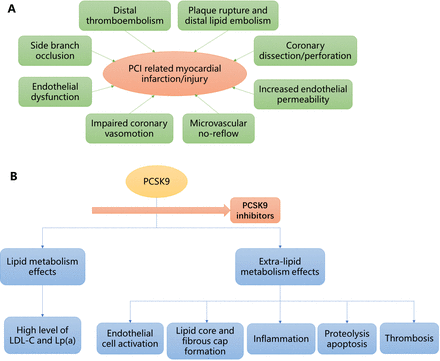
Introduction Percutaneous coronary intervention (PCI)-related myocardial infarction (type 4a MI) and major periprocedural myocardial injury have been demonstrated leading to poor prognosis of patients with coronary heart disease (CHD) undergoing...
Strengths: This study will provide new evidence of the efficacy of alirocumab on preventing percutaneous coronary intervention (PCI)-related myocardial infarction or major periprocedural myocardial injury in patients with coronary heart disease undergoing elective PCI.
Inclisiran adjuvant therapy to statins for the use of hypercholesterolemia: a commentary - The Egyptian Heart Journal
Source : https://tehj.springeropen.com/articles/10.1186/s43044-023-00389-8
Background Hypercholesterolemia is a lipid disorder characterized by excessively high levels of low-density lipoproteins, which encourages fat accumulation in your arteries, hence escalating the chances of heart attack and stroke....
Conclusions: While statin treatments have been extensively researched and are strongly endorsed by randomized controlled trials and clinical guidelines, not every patient can tolerate statin therapy or attain an adequate reduction in LDL-C levels through statin treatment alone. Inclisiran provides convenience as it needs to be administered...
Impact of metformin on statin-associated myopathy risks in dyslipidemia patients - PubMed
Source : https://pubmed.ncbi.nlm.nih.gov/37417539/
A growing number of patients with metabolic disorders are receiving statin and antidiabetic therapies as comedications. A signal of increased risk of myotoxicity due to potential interactions between antidiabetics and...
Conclusions/Relevance: This study found that a comedication with metformin was associated with decreased myopathy risk in statin-treated dyslipidemia patients compared to statin-only users. Our findings suggest that metformin may provide protective effects on potential muscle toxicities induced by statin therapy.

The Inhibition of Evolocumab on Non-Infarct-Related Artery Disease in Patients with ST-Elevation Myocardial Infarction
Evolocumab + statin therapy could significantly improve physiological function of coronary arteries, downregulate re-hospitalization rate of STEMI pts with NIRA
Conclusion: Evolocumab combined with statin therapy can significantly improve the anatomical and physiological function of the coronary arteries and downregulate the re-hospitalization rate due to UA in STEMI patients with NIRA.