



Genetic and molecular architecture of familial hypercholesterolemia - PubMed
Source : https://pubmed.ncbi.nlm.nih.gov/36196022/
Atherosclerotic cardiovascular disease is the first cause of death globally. Despite its important risk of premature atherosclerosis and cardiovascular disease, Familial hypercholesterolemia (FH) is still largely underdiagnosed worldwide. It is...
Conclusions: In the last two decades, major progress has been made in clinical and genetic diagnostic tools and the therapeutic arsenal against FH. Improving prevention, diagnosis and treatment, and making them more accessible to all patients will help reduce the lifelong burden of the disease.

The role of PCSK9 in NAFLD/NASH and therapeutic implications of PCSK9 inhibition - PubMed
Source : https://pubmed.ncbi.nlm.nih.gov/36193738/
The current evidence from a landscape of preclinical and clinical studies examining the role of PCSK9 in NAFLD shows controversial results. Preclinical studies indicate that PCSK9 associates with NAFLD and...
Expert Opinion: The current evidence from a landscape of preclinical and clinical studies examining the role of PCSK9 in NAFLD shows controversial results. Preclinical studies indicate that PCSK9 associates with NAFLD and nonalcoholic steatohepatitis (NASH) progression in opposite directions. In humans, it has been concluded that the severity of...

Healthcare Access Among Individuals of Asian Descent in the U.S - PubMed
Source : https://pubmed.ncbi.nlm.nih.gov/36196100/
1 Department of Medicine, Section of Cardiology, Baylor College of Medicine, Houston, TX. 2 Department of Medicine, Cleveland Clinic Foundation, Cleveland, OH. 3 Division of Medicine, Forrest General Hospital, Hattiesburg,...
Conclusions: Conclusions: Among Asians living in the U.S. with cardiovascular risk factors or ASCVD, Asian Indians and Other Asians are more likely to report delayed care or no care due to cost compared with Chinese.

The Association Between Vitamin D Levels and the 10-Year Risk of Atherosclerotic Cardiovascular Disease: A Population-Based Study - PubMed
Source : https://pubmed.ncbi.nlm.nih.gov/36178328/
Background: The association between vitamin D levels and atherosclerotic cardiovascular disease (ASCVD) risk remains unclear. In this study, the association between serum 25(OH)D and 10-year ASCVD risk was examined in...
Conclusion: Our data suggest a negative association between vitamin D levels and the predicted 10-year risk of ASCVD. Further studies are required to investigate whether vitamin D supplements could reduce the risk of ASCVD.
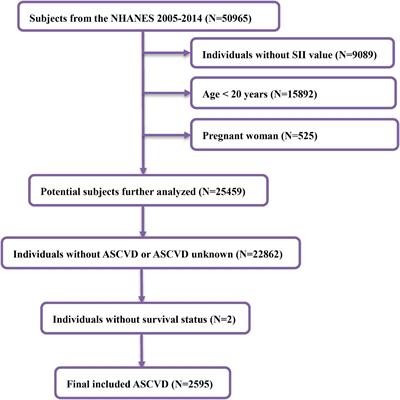
Association of the systemic immune-inflammation index with all-cause mortality in patients with arteriosclerotic cardiovascular disease
Source : https://www.frontiersin.org/articles/10.3389/fcvm.2022.952953/full
ObjectiveSystemic immune-inflammation index (SII), derived from blood cell counts of circulating platelets, neutrophils, and lymphocytes, has been identified as a novel inflammatory and prognostic marker. However, the clinical value of...
Conclusions: An association was detected between the baseline ln-SII and all-cause mortality in a United States ASCVD population. Increased SII is associated with poor survival in individuals with ASCVD.