

Lipid Management Connect
Profile Image
  • Saved
Primary and Secondary Prevention of Stroke and Cardiovascular Events Using Evolocumab and Alirocumab: Meta-Analysis of Randomized Controlled Trials

Primary and Secondary Prevention of Stroke and Cardiovascular Events Using Evolocumab and Alirocumab: Meta-Analysis of Randomized Controlled Trials

Source : https://pubmed.ncbi.nlm.nih.gov/38529927/

Our findings indicate that evolocumab and alirocumab are significantly effective without increasing the risk of hemorrhagic stroke. Based on this, the PCSK9 inhibitors can be highly recommended for cholesterol management.

These findings indicate that evolocumab and alirocumab are significantly effective without increasing the risk of hemorrhagic stroke.

Profile Image
  • Saved
Updates from The American College of Cardiology Scientific Session

The American College of Cardiology (ACC) 2024 Annual Scientific Session (ACC.24) is taking place April 6 to 8, 2024, in Atlanta. This year’s meeting marks the 75th anniversary of ACC and features seven guideline-specific sessions and 23 late-breaking trials, among other key sessions on the prevention, diagnosis, and treatment of the full spectrum of cardiovascular diseases (CVDs).


  • Saved
Online Health Information Behaviour and Its Association With Statin Adherence in Patients With High Cardiovascular Risk: a Prospective Cohort Study

Online Health Information Behaviour and Its Association With Statin Adherence in Patients With High Cardiovascular Risk: a Prospective Cohort Study

Source : https://www.ncbi.nlm.nih.gov/pmc/articles/PMC10956144/

Statins are effective for preventing cardiovascular disease. However, many patients decide not to take statins because of negative influences, such as online misinformation. Online health information may affect decisions on...

Patients with high CV risk who actively searched for online health information had lower statin adherence, and this relationship was mediated by higher concerns about statins.

Profile Image
  • Saved
Improved Lipid-Lowering Treatment and Reduction in Cardiovascular Disease Burden in Homozygous Familial Hypercholesterolemia: the SAFEHEART Follow-Up Study

Improved Lipid-Lowering Treatment and Reduction in Cardiovascular Disease Burden in Homozygous Familial Hypercholesterolemia: the SAFEHEART Follow-Up Study

Source : https://pubmed.ncbi.nlm.nih.gov/38523000/

HoFH is a severe life threating disease with a high genetic and phenotypic variability. The improvement in lipid-lowering treatment and LDL-C levels have contributed to reduce ASCVD events.

Patients with ≥1 null variant are diagnosed younger, and show a more severe phenotype with higher LDL-C levels, more aortic valve disease, and earlier onset of ASCVD.

Profile Image
  • Saved
A Preview into the American College of Cardiology Scientific Session

The American College of Cardiology will host its annual meeting (ACC.24) in Atlanta from April 6 to 8, 2024. The theme of this year’s meeting is “Transforming Cardiovascular Care for All.” Click to access some of the highlights that caught our attention.

  • Saved
Patterns and Gaps in Guideline-Directed Statin Use for Atherosclerotic Cardiovascular Disease by Race and Ethnicity

Patterns and Gaps in Guideline-Directed Statin Use for Atherosclerotic Cardiovascular Disease by Race and Ethnicity

Source : https://pubmed.ncbi.nlm.nih.gov/38525197/

In patients with incident ASCVD, we describe suboptimal and heterogenous 1-year post-ASCVD guideline-directed statin use and 1-year post-ASCVD LDL-c control across disaggregated race and ethnicity groups. Findings may improve understanding...

Disaggregation of race/ethnicity groups uncovered suboptimal and heterogenous use of statins and achievement of LDL-C control after ASCVD events.

Profile Image
  • Saved
Lipoprotein(a) Is a Prevalent yet Vastly Underrecognized Risk Factor for Cardiovascular Disease

Lipoprotein(a) Is a Prevalent yet Vastly Underrecognized Risk Factor for Cardiovascular Disease

Source : https://pubmed.ncbi.nlm.nih.gov/38525410/

Lipoprotein(a) is a Prevalent yet Vastly Underrecognized Risk Factor for Cardiovascular Disease

Lipoprotein(a) testing is essential for comprehensive CVD risk evaluation and is indicated in those with a personal or family history of premature CVD, if not all individuals.

Profile Image
  • Saved
Detailed Lipid Profiles and Lipid-Related Residual Risk After 12-Week 10 mg Rosuvastatin Treatment for Acute Myocardial Infarction

Detailed Lipid Profiles and Lipid-Related Residual Risk After 12-Week 10 mg Rosuvastatin Treatment for Acute Myocardial Infarction

Source : https://www.jstage.jst.go.jp/article/internalmedicine/advpub/0/advpub_3476-24/_article

Objective We aimed to reveal detailed on-treatment lipid profiles, lipid-related surrogate markers, and factors predicting failure to achieve the guid ...

More than one-half of the patients treated with rosuvastatin 10 mg/day with acute MI did not achieve the guideline-recommended goal of lipid management and still had lipid-related residual risk at 12 weeks.

Profile Image
  • Saved

Nurse-led CV risk factor management in academic HIV clinics may lead to fewer CV events and should inform implementation of prevention programs for people with HIV.

Profile Image
  • Saved
Alcohol Consumption, High-Density Lipoprotein Particles and Subspecies, and Risk of Cardiovascular Disease: Findings From the PREVEND Prospective Study

Alcohol Consumption, High-Density Lipoprotein Particles and Subspecies, and Risk of Cardiovascular Disease: Findings From the PREVEND Prospective Study

Source : https://www.mdpi.com/1422-0067/25/4/2290

The associations of HDL particle (HDL-P) and subspecies concentrations with alcohol consumption are unclear. We aimed to evaluate the interplay between alcohol consumption, HDL parameters and cardiovascular disease (CVD) risk....

Moderate alcohol consumption appears to beneficially influence levels of HDL-C, HDL-P, and other HDL parameters and is associated with a reduced risk of CVD.

Profile Image
  • Saved
A Systematic Review and Meta-Analysis of Serum Lipid Concentrations in People With Down Syndrome

A Systematic Review and Meta-Analysis of Serum Lipid Concentrations in People With Down Syndrome

Source : https://pubmed.ncbi.nlm.nih.gov/38404114/

Individuals with DS have less favourable blood lipid concentrations than their controls, particularly HDL-C, triglycerides, and total-C, even when grouped by age. These findings underscore the importance of closer monitoring...

Those with Down syndrome exhibited less favorable lipid profiles versus those of the control group, except for total cholesterol levels, which did not cross the 200-mg/dL threshold in either group.

Profile Image
  • Saved

The findings indicate that homozygous familial hypercholesterolemia represents a very high risk of premature ASCVD without clear sex differences, except a higher incidence of MI in men.

Profile Image
  • Saved
Long-Term Cardiovascular Risks and the Impact of Statin Treatment on Socioeconomic Inequalities: a Microsimulation Model

Long-Term Cardiovascular Risks and the Impact of Statin Treatment on Socioeconomic Inequalities: a Microsimulation Model

Source : https://bjgp.org/content/early/2024/02/16/BJGP.2023.0198

Background UK cardiovascular disease (CVD) incidence and mortality have declined in recent decades but socioeconomic inequalities persist. Aim To present a new CVD model, and project health outcomes and the...

This study found that guideline-recommended statin treatment has good potential to reduce inequalities in health across socioeconomic status, although the reductions are larger for differences in life expectancy than for quality-adjusted life years.

Profile Image
  • Saved
Remnant Cholesterol as a New Lipid-Lowering Target to Reduce Cardiovascular Events

Remnant Cholesterol as a New Lipid-Lowering Target to Reduce Cardiovascular Events

Source : https://journals.lww.com/co-lipidology/abstract/9900/remnant_cholesterol_as_a_new_lipid_lowering_target.64.aspx

Current and novel therapeutic approaches to target remnant cholesterol are discussed. Recent findings A recent Mendelian randomization study of over 12 000 000 single-nucleotide polymorphisms associated with high levels of remnant cholesterol,...

A recent Mendelian randomization study of >12 million single-nucleotide polymorphisms associated with high levels of remnant cholesterol demonstrated a genetic association between remnant cholesterol and adverse cardiovascular events among nearly 1 million participants.

Profile Image
  • Saved
Effect of Household Income on Cardiovascular Diseases, Cardiovascular Biomarkers, and Socioeconomic Factors

Effect of Household Income on Cardiovascular Diseases, Cardiovascular Biomarkers, and Socioeconomic Factors

Source : https://pubmed.ncbi.nlm.nih.gov/38350757

Higher household income is causally associated with better socioeconomic factors and improved cardiovascular biomarkers, which translates into a reduced prevalence of cardiovascular diseases. Policies to improve income equality may result...

Higher household income is causally associated with better socioeconomic factors and improved CV biomarkers, which translates into a reduced prevalence of CVD.

Profile Image
  • Saved
Association Between Serum Triglyceride Level and Severity of Acute Biliary Pancreatitis

Association Between Serum Triglyceride Level and Severity of Acute Biliary Pancreatitis

Source : https://pubmed.ncbi.nlm.nih.gov/38350790/

Elevated serum TG levels were independently associated with more severe ABP. The incidence of POF, APFC, and ANC in ABP patients increased with the increase of TG levels, with a...

ABP is the most common type of AP, with an abrupt onset, rapid progression, and a tendency to develop SIRS and multiple organ dysfunction syndrome.

Profile Image
  • Saved
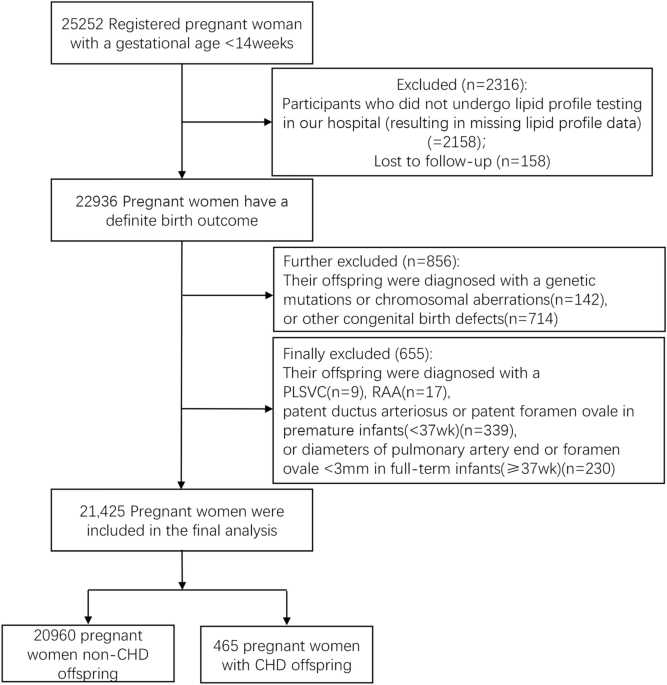
Association Between Lipid Profile in Early Pregnancy and the Risk of Congenital Heart Disease in Offspring: a Prospective Cohort Study

Association Between Lipid Profile in Early Pregnancy and the Risk of Congenital Heart Disease in Offspring: a Prospective Cohort Study

Source : https://www.nature.com/articles/s41598-024-53876-6

This study aimed to investigate the association of lipid profile in early pregnancy and the risk of congenital heart disease (CHD) in offspring. This study was a prospective cohort design...

The study discovered that higher TG, LDL, and Apo B levels in early pregnancy were associated with an increased risk of CHD in offspring.

Profile Image
  • Saved
Lysophosphatidic Acid-Mediated Inflammation at the Heart of Heart Failure

Lysophosphatidic Acid-Mediated Inflammation at the Heart of Heart Failure

Source : https://pubmed.ncbi.nlm.nih.gov/38340272/

Recent findings have shed light on the central role of bioactive lipids, specifically lysophosphatidic acid (LPA) and ceramides, in heart failure pathology. Traditional studies have emphasized factors such as hypoxia-mediated...

This review aimed to bridge the gap between basic research and clinical practice by providing actionable insights and a foundation for the development of targeted therapies that could mitigate the effects of bioactive lipids on heart failure.

Profile Image
  • Saved
Effect of Unfermented Soy Product Consumption on Blood Lipids in Postmenopausal Women: a Systematic Review and Meta-Analysis of Randomized Controlled Trials

Effect of Unfermented Soy Product Consumption on Blood Lipids in Postmenopausal Women: a Systematic Review and Meta-Analysis of Randomized Controlled Trials

Source : https://pubmed.ncbi.nlm.nih.gov/38342411/

The results showed that unfermented soy product consumption significantly reduced TC and TG levels, and increased HDL-C levels in postmenopausal women. The findings of this review contribute to the evidence-base...

Unfermented soy product consumption significantly reduced total cholesterol and triglyceride levels, and increased HDL-C levels in postmenopausal women.

Profile Image
  • Saved
Identifying High Cholesterol in the Ambulance Setting: a Mixed-Methods Cohort Study to Tackle Health Inequality

Identifying High Cholesterol in the Ambulance Setting: a Mixed-Methods Cohort Study to Tackle Health Inequality

Source : https://pubmed.ncbi.nlm.nih.gov/38291949/

Undiagnosed hyperlipidaemia exists in patients using the ambulance service, irrespective of SES. Individual and healthcare system factors prevent engagement in cholesterol lowering behaviours.

Socioeconomic status was not associated with hyperlipidemia or likelihood of seeking further management; rather, it was dictated by competing comorbidities, poor health literacy, and digital divides.

Profile Image