
Real-World Insights Into Evolocumab Use in Patients With Hyperlipidemia: Canadian Analysis From the ZERBINI Study
Source : https://www.cjcopen.ca/article/S2589-790X(22)00051-8/fulltext
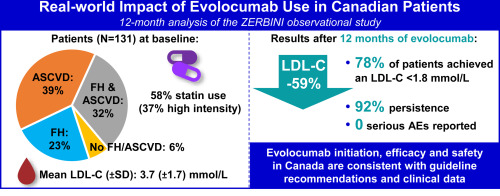
The 2021 Canadian Cardiovascular Society guidelines recommend proprotein convertase subtilisin-kexin type 9 (PCSK9) inhibitor therapy in patients with atherosclerotic cardiovascular disease whose low-density lipoprotein cholesterol (LDL-C) concentration remains ≥ 1.8...
Conclusions: These findings provide real-world evidence of guideline-recommended initiation of evolocumab therapy, as well as confirmation of its effectiveness and safety in a Canadian population. Evolocumab therapy can address a healthcare gap in the management of dyslipidemia, by increasing the proportion of patients achieving LDL-C goals...
Share





Hyperlipidemia in Children and Adolescents - PubMed
Source : https://pubmed.ncbi.nlm.nih.gov/35700367/
While coronary artery disease (CAD) is thought to be a disease of adulthood, atherosclerosis can originate in childhood and adolescence. There is a paucity of randomized controlled treatment trials regarding...
Conclusion: Statins are the most widely used medications. Newer medications have proven integral in treatment for genetic dyslipidemias including evolocumab and evinacumab.
Share

A scoping review of interventions increasing screening and diagnosis of familial hypercholesterolemia - PubMed
Source : https://pubmed.ncbi.nlm.nih.gov/35713652/
Given the diversity of effective interventions identified in this review, future efforts could explore approaches that maximize identification through a combination of interventions. Our results support one such strategy that...
Conclusion: Given the diversity of effective interventions identified in this review, future efforts could explore approaches that maximize identification through a combination of interventions. Our results support one such strategy that uses electronic medical records to screen for index cases and a 2-step indirect and direct contact method...
Share

The promising novel therapies for familial hypercholesterolemia - PubMed
Source : https://pubmed.ncbi.nlm.nih.gov/35712827/
doi: 10.1002/jcla.24552. Online ahead of print. 1 School of Medicine of Ningbo University, Ningbo, China. 2 The Affiliated Ningbo First Hospital, School of Medicine of Ningbo University, Ningbo, China. 3...
Conclusion: While the therapies based on different targets including protein, RNA, and DNA are on different stages of development, the mechanisms of these novel therapies may provide new ideas for precision medicine.
Share

New Treatment Targets and Innovative Lipid-Lowering Therapies in Very-High-Risk Patients with Cardiovascular Disease
Source : https://www.ncbi.nlm.nih.gov/pmc/articles/PMC9138506/
Bart De Geest, Academic Editor The effective and fast reduction of circulating low-density lipoprotein cholesterol (LDL-C) is a cornerstone for secondary prevention of atherosclerotic disease progression. Despite the substantial lipid-lowering...
Conclusion: In this review, we summarize evidence for the lipid-modifying properties of these novel agents and their safety profiles, and discuss their potential pleiotropic effects beyond LDL-C reduction (if any) as well as their effects on clinical endpoints as cardiovascular mortality. In addition to a treatment strategy of “the lower, the...
Share
-
 Lipid Management Connect3yrKey Points • Source: Biomedicines • Conclusion: “In this review, we summarize evidence for the lipid-modifying properties of these novel agents and their safety profiles, and discuss their potential pleiotropic effects beyond LDL-C reduction Show More