

Pharmacogenomic Study of Statin-Associated Muscle Symptoms in the ODYSSEY OUTCOMES Trial - PubMed
Source : https://pubmed.ncbi.nlm.nih.gov/35543701/
2022 May 11;101161CIRCGEN121003503. doi: 10.1161/CIRCGEN.121.003503. Online ahead of print. 1 Division of Pharmacotherapy and Experimental Therapeutics, UNC Eshelman School of Pharmacy, University of North Carolina at Chapel Hill (W.A.M.). 2...
Conclusions: This study comprises the largest discovery exome-wide and genome-wide association studies for atorvastatin- or rosuvastatin-mediated SAMS to date. Conclusion/Relevance: These novel genetic findings may provide biological/mechanistic insight into this drug-induced toxicity, and help identify at-risk patients before selection of...
Share




Effect of PCSK9 Inhibitor on Blood Lipid Levels in Patients with High and Very-High CVD Risk: A Systematic Review and Meta-Analysis
Source : https://www.ncbi.nlm.nih.gov/pmc/articles/PMC9072011/
We aimed to investigate the effects of proprotein convertase subtilisin/kexin type 9 (PCSK9) inhibitor on blood lipid levels in patients with high and very-high cardiovascular risk. 14 trials ( n...
Conclusion: Addition of PCSK9 inhibitors to standard therapy resulted in definite improvement in blood lipid levels compared with therapies that did not include them.
Share

Evidence for intensive LDL-C lowering for acute coronary syndrome: Recommendations from the Lipid Association of India - PubMed
Source : https://pubmed.ncbi.nlm.nih.gov/35508456/
Patients with acute coronary syndrome (ACS) have a high risk of subsequent adverse cardiovascular outcomes, particularly within the first 30 days. Although it is well documented that initiation of statin...
Conclusion: The Lipid Association of India recommends individualized aggressive LDL-C goals after ACS, which can be rapidly achieved with high intensity statin therapy and subsequent goal-directed adjunctive treatment with ezetimibe and PCSK9 inhibitors. Improved treatment of hypercholesterolemia achieved within weeks after ACS has the...
Share

Safety of proprotein convertase subtilisin/kexin 9 inhibitors: a systematic review and meta-analysis
Source : https://heart.bmj.com/content/early/2022/05/03/heartjnl-2021-320556
Objective To determine the harms of proprotein convertase subtilisin/kexin 9 (PCSK9) inhibitors in people who need lipid-lowering therapy. Methods This systematic review included randomised controlled trials that compared PCSK9 inhibitors...
Conclusions: PCSK9 inhibitors slightly increase the risk of severe injection-site reaction but not cataracts, gastrointestinal haemorrhage, neurocognitive events, new-onset diabetes or severe myalgia or muscular pain.
Share
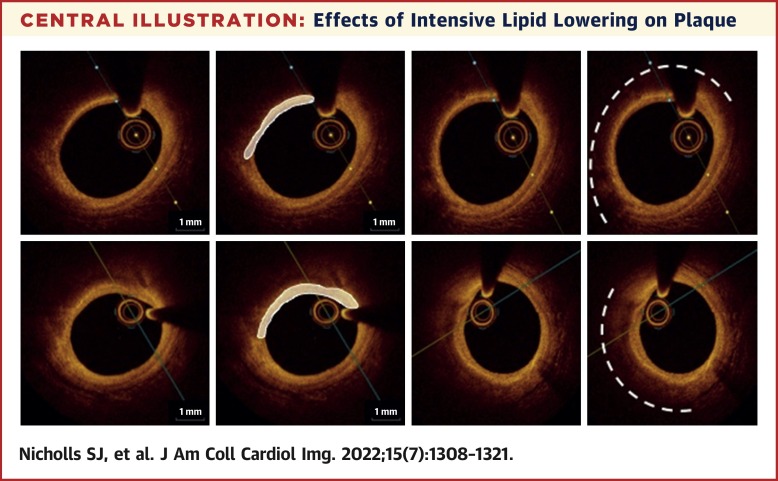
Effect of Evolocumab on Coronary Plaque Phenotype and Burden in Statin-Treated Patients Following Myocardial Infarction
Source : https://www.sciencedirect.com/science/article/abs/pii/S1936878X22001437?via=ihub
The purpose of this study was to determine the effect of evolocumab on optical coherence tomography (OCT) measures of plaque composition. The proprotein convertase subtilisin kexin type-9 inhibitor evolocumab produced...
Conclusions: The combination of statin and evolocumab after a non–ST-segment elevation myocardial infarction produces favorable changes in coronary atherosclerosis consistent with stabilization and regression. This demonstrates a potential mechanism for the improved clinical outcomes observed achieving very low LDL-C levels following an...
Share