

Association of cholesterol levels with hemorrhagic transformation and cerebral edema after reperfusion therapies
Source : https://www.ncbi.nlm.nih.gov/pmc/articles/PMC10069196/
Irene Escudero-Martínez, 1, 2 Magnus Thorén, 3, 4 Marius Matusevicius, 3, 5 Charith Cooray, 3, 5 Andrea Zini, 6 Christine Roffe, 7 Danilo Toni, 8 Georgios Tsivgoulis, 9 Peter Ringleb,...
Conclusions: Our findings indicate an independent association between low levels of TC and higher odds of moderate/severe CED. Further studies are needed to confirm these findings.
Share




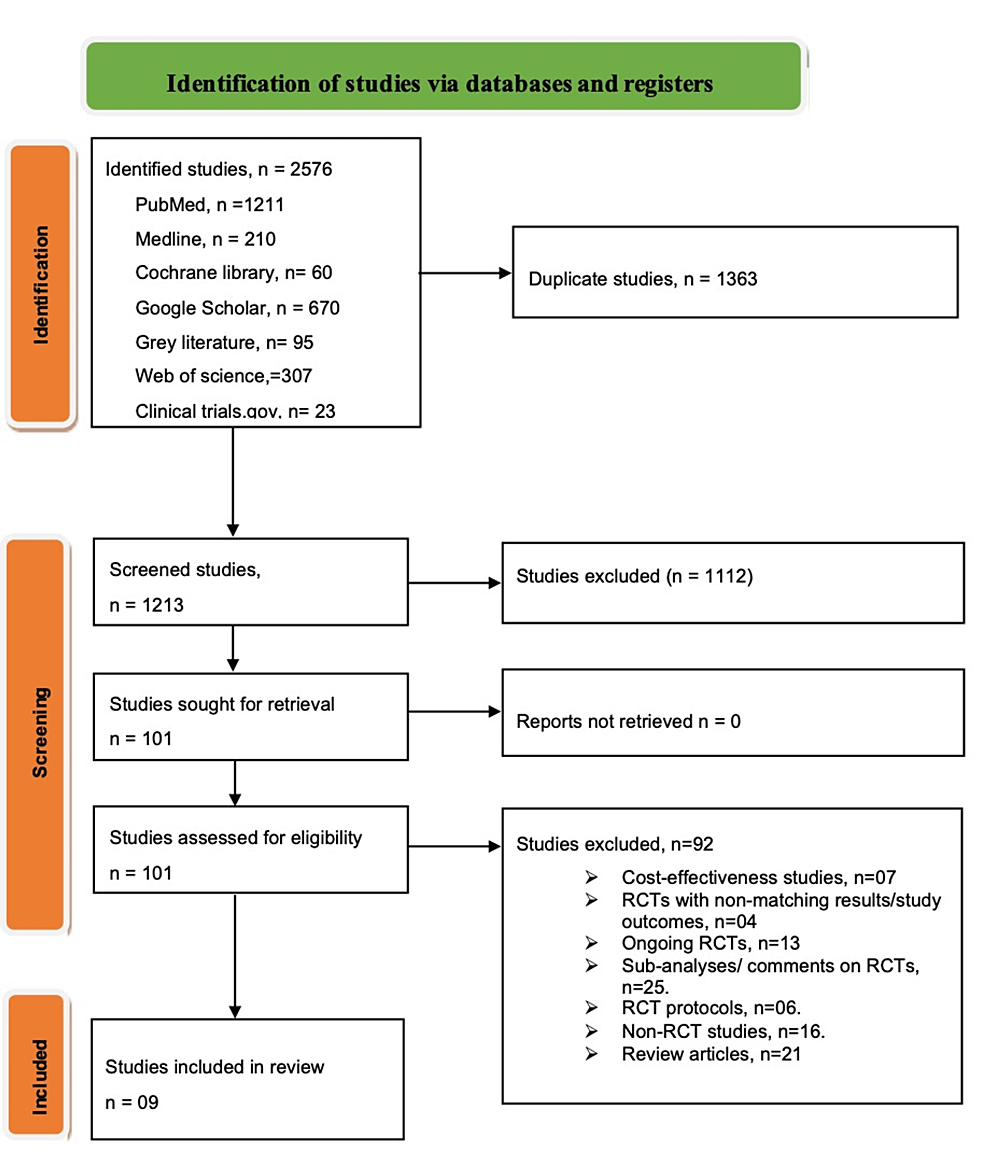
Safety and Effectiveness of Evolocumab During Acute and Sub-acute Phases of Acute Coronary Syndrome (ACS): A Systematic Review and Meta-analysis
Background: Coronary artery disease (CAD), manifested mainly as acute coronary syndrome (ACS), continues to be a major cause of mortality globally and a significant contributing factor to the global disease...
Conclusion: Early evolocumab therapy initiation was associated with a significant decrease in LDL-C levels and was not associated with an increased risk of adverse effects in comparison to placebo.
Share

Management of Statin Intolerant Patients in the Era of Novel Lipid Lowering Therapies: A Critical Approach in Clinical Practice - PubMed
Source : https://pubmed.ncbi.nlm.nih.gov/36983444/
Statins are the cornerstone of lipid-lowering therapies effective for cardiovascular risk reduction. Although they are generally well tolerated, statin intolerance (SI) is frequent in clinical practice, and it is usually...
Relevance: In this review, we evaluated SI management focusing on non-statin lipid lowering therapies and their implications in lipid lowering approaches in clinical practice.
Share

Interplay between microRNAs, Serum Proprotein Convertase Subtilisin/Kexin Type 9 (PCSK9), and Lipid Parameters in Patients with Very High Lipoprotein(a) Treated with PCSK9 Inhibitors - PubMed
Source : https://pubmed.ncbi.nlm.nih.gov/36980904/
The .gov means it's official. Federal government websites often end in .gov or .mil. Before sharing sensitive information, make sure you're on a federal government site. The site is secure....
Conclusions/Relevance: Our results support a role for miR-483-5p in regulating circulating PCSK9 in vivo. The difference in expression of miR-191-5p, miR-224-5p, and miR-337-3p between patients and control subjects suggests their possible role in the pathogenesis of coronary artery disease.
Share
efficacy of PCSK9 inhibitors on major cardiovascular events and lipid profile in patients with diabetes: a systematic review and meta-analysis of randomized controlled trials
You do not currently have access to this article. The efficacy of PCSK9 inhibitors on major cardiovascular events and lipid profile in patients with diabetes: a systematic review and meta-analysis...
Conclusions: PCSK9i appear to be effective in reducing the risk of MACE and in improving lipid profiles of subjects with diabetes and dyslipidemia.
Share