
Effects of PCSK9 inhibitors on HDL cholesterol efflux and serum cholesterol loading capacity in familial hypercholesterolemia subjects: a multi-lipid-center real-world evaluation
Source : https://www.frontiersin.org/articles/10.3389/fmolb.2022.925587/full
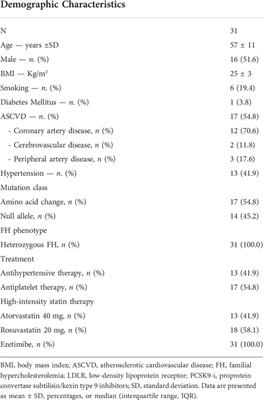
Proprotein convertase subtilisin/kexin type 9 (PCSK9), beyond regulating LDL cholesterol (LDL-c) plasma levels, exerts several pleiotropic effects by modulating lipid metabolism in extrahepatic cells such as macrophages. Macrophage cholesterol homeostasis...
Conclusion: PCSK9-i treatment significantly increased HDL-CEC through ABCG1 and aqueous diffusion pathways and reduced the serum CLC in FH patients. The favorable effect of PCSK9-i on functional lipid profile could contribute to the cardiovascular benefit of these drugs in FH patients.
Share





PCSK9 Promotes Endothelial Dysfunction During Sepsis Via the TLR4/MyD88/NF-κB and NLRP3 Pathways - PubMed
Source : https://pubmed.ncbi.nlm.nih.gov/35930089/
Endothelial dysfunction often accompanies sepsis. We aimed to explore the role of PCSK9 in septic endothelial dysfunction. Sepsis was induced by lipopolysaccharide (LPS) treatment of human umbilical vein endothelial cells...
Relevance: Endothelial dysfunction often accompanies sepsis. We aimed to explore the role of PCSK9 in septic endothelial dysfunction.
Share
Evolocumab on top of empagliflozin improves endothelial function of individuals with diabetes: randomized active-controlled trial - Cardiovascular Diabetology
Source : https://cardiab.biomedcentral.com/articles/10.1186/s12933-022-01584-8
Background Sodium-glucose cotransporter 2 inhibitors (SGLT2i) improve endothelial dysfunction and reduce cardiovascular events in individuals with type 2 diabetes (T2D). Proprotein convertase subtilisin/kexin 9 (PCSK9i) inhibitors reduce cardiovascular events in...
Conclusions: In individuals with T2D, the addition of evolocumab on top of empagliflozin improves endothelial function.
Share

New Therapeutic Approaches in Treatment of Dyslipidaemia-A Narrative Review - PubMed
Source : https://pubmed.ncbi.nlm.nih.gov/35890138/
Dyslipidaemia is a well-known risk factor for the development of cardiovascular disease, a leading cause of morbidity and mortality in developed countries. As a consequence, the medical community has been...
Conclusion: This article provides a short summary of new agents currently used or being developed for lipid lowering treatment.
Share

Clinical Aspects of Genetic and Non-Genetic Cardiovascular Risk Factors in Familial Hypercholesterolemia - PubMed
Source : https://pubmed.ncbi.nlm.nih.gov/35885941/
1 Division of Metabolism, Department of Internal Medicine, Faculty of Medicine, University of Debrecen, H-4032 Debrecen, Hungary. 2 Division of Endocrinology, Department of Internal Medicine, Faculty of Medicine, University of...
Conclusion: In this review, we summarize the most important genetic and non-genetic factors that might affect the risk prediction and therapeutic strategy in FH through the eyes of clinicians focusing on disorders that might not be in the center of FH research. The review highlights the complexity of FH care and the need of an...
Share