


Systematic Review of the Economic Evaluation of Sodium-Glucose Cotransporter-2 Inhibitors Used as Treatment in Patients with Heart Failure - Clinical Drug Investigation
Source : https://link.springer.com/article/10.1007/s40261-023-01283-6
Background Sodium-glucose cotransporter-2 (SGLT2) inhibitors have been recently used as therapeutic agents for type 2 diabetes mellitus. Recent clinical trials have shown that they are beneficial for reducing the risk...
Conclusions: Most of the studies reported the cost-effectiveness of dapagliflozin and empagliflozin in patients with HFrEF. However, the cost-effectiveness of empagliflozin differed from country to country regarding patients with HFpEF. We suggest that further economic evaluation of SGLT2 inhibitors should focus on patients with HFpEF in more...
Share





Left ventricular mass predicts cardiac reverse remodelling in patients treated with empagliflozin - Cardiovascular Diabetology
Source : https://cardiab.biomedcentral.com/articles/10.1186/s12933-023-01849-w
Background The cardiovascular (CV) benefits of sodium-glucose transport protein 2 inhibitors have been attributed, in part, to cardiac reverse remodelling. The EMPA-HEART CardioLink-6 study reported that sodium-glucose cotransporter-2 inhibition for...
Conclusion: Patients with larger LVMi at baseline experienced significantly greater cardiac reverse remodelling with empagliflozin than patients with a lower LVMi at baseline. Studies with larger cohorts and longer follow-ups are warranted to investigate the influence of baseline LVM on SGLT2i-mediated cardiac reverse remodelling and the...
Share

Lessons from a pre-specified meta-analysis of sodium-glucose cotransporter-2 (SGLT2) inhibitors in heart failure: Time for new clinical recommendations
Source : https://globalcardiologyscienceandpractice.com/index.php/gcsp/article/view/621
https://doi.org/10.21542/gcsp.2023.14 Cardiovascular disease remains the leading cause of death worldwide with heart failure (HF) being one of the significant contributors to morbidity and mortality. The incidence of HF with preserved...
Conclusions/Relevance: Recent trials have shown reductions in cardiovascular death and heart failure events in patients with mildly reduced or preserved ejection fraction (EF), although with uncertainty around the consistency of clinical benefits across the classes and therapeutic effects.
Share

Racial Differences in Low Natriuretic Peptide Levels: Implications for Heart Failure Clinical Trials
Source : https://www.sciencedirect.com/science/article/abs/pii/S0002870323001631?via=ihub
Some patients with heart failure (HF) have low natriuretic peptide (NP) levels. It is unclear whether specific populations are disproportionately excl...
Conclusions: Nearly 10% of patients hospitalized with HF have unexpectedly low BNP levels. Simulating inclusion into a prototype HFpEF RCT demonstrated that requiring increasingly elevated NP levels disproportionately excludes Black patients.
Share
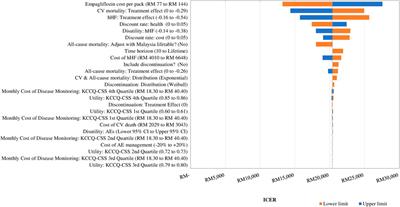
Cost-effectiveness of adding empagliflozin to the standard of care for patients with heart failure with reduced ejection fraction from the perspective of healthcare system in Malaysia
Source : https://www.frontiersin.org/articles/10.3389/fphar.2023.1195124/full
Objective: The aim of this study was to determine the cost-effectiveness of adding empagliflozin to the standard of care versus SoC alone for the treatment of patients with heart failure...
Conclusion: Empagliflozin + SoC compared to SoC alone for the treatment of HFrEF patients was cost-effective from the perspective of the MoH of Malaysia.
Share