

Right ventricular performance in patients with heart failure with mildly reduced ejection fraction: the forgotten ventricle - The International Journal of Cardiovascular Imaging
Source : https://link.springer.com/article/10.1007/s10554-022-02652-6
Right ventricular (RV) function is a major determinant of prognosis and adverse outcomes in patients with heart failure (HF). It is largely unknown if HF with mildly reduced ejection fraction...
Conclusions/Relevance: The present study shows a high prevalence of RV dysfunction in HFmrEF patients. Study findings provides some new insights on RV and LV systolic dysfunction coupling whereas RV diastolic dysfunction was not dependent on LV systolic dysfunction.
Share





Longitudinal CMR assessment of cardiac global longitudinal strain and hemodynamic forces in a mouse model of heart failure - The International Journal of Cardiovascular Imaging
Source : https://link.springer.com/article/10.1007/s10554-022-02631-x
To longitudinally assess left ventricle (LV) global longitudinal strain (GLS) and hemodynamic forces during the early stages of cardiac dysfunction in a mouse model of heart failure with preserved ejection...
Conclusions/Relevance: Our results indicated that hemodynamic forces parameters were the only functional outcome measure that showed distinct temporal differences between groups. As such, changes in hemodynamic forces reflect early alterations in cardiac function which can be of added value in (pre)clinical research on HFpEF.
Share
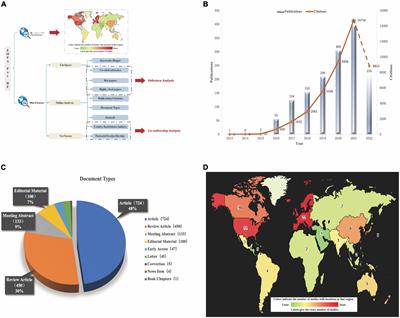
Knowledge domain and emerging trends in empagliflozin for heart failure: A bibliometric and visualized analysis
Source : https://www.frontiersin.org/articles/10.3389/fcvm.2022.1039348/full
ObjectiveEmpagliflozin (EMPA), a sodium-glucose cotransporter 2 inhibitor (SGLT2i), is recommended for all patients with Heart failure (HF) to reduce the risk of Cardiovascular death, hospitalization, and HF exacerbation. Qualitative and...
Conclusion: Based on methods such as bibliometrics, citation analysis and knowledge graph, this study analyzed the current situation and trend of EMPA for Heart Failure, sorted out the knowledge context in this field, and provided reference for current and future prevention and scientific research.
Share
The effect of EMPAgliflozin on markers of inflammation in patients with concomitant type 2 diabetes mellitus and Coronary ARtery Disease: the EMPA-CARD randomized controlled trial - Diabetology & Metabolic Syndrome
Source : https://dmsjournal.biomedcentral.com/articles/10.1186/s13098-022-00951-5
Systemic inflammation and oxidative burden in patients with type 2 diabetes mellitus (T2DM) causes deleterious cardiovascular outcomes. We sought to investigate the clinical antioxidative and anti-inflammatory effects of empagliflozin. Platelet...
Conclusion: Among patients with T2DM and CAD, 6-month treatment with empagliflozin can mitigate inflammation, platelet activity and oxidative stress and is associated with clinical cardiovascular benefits.
Share
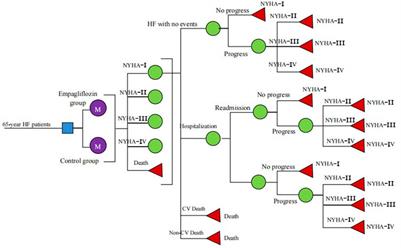
Cost-utility analysis of empagliflozin in heart failure patients with reduced and preserved ejection fraction in China
Source : https://www.frontiersin.org/articles/10.3389/fphar.2022.1030642/full
Objective: EMPEROR-Reduced and EMPEROR-Preserved studies showed the benefits of empagliflozin along with a reduction in cardiovascular death or hospitalisation for heart failure (HF).
Conclusion: Considering that the WTP threshold was $12,652.5/QALY, adding empagliflozin to standard therapy was proven to be a slightly more cost-effective option for the treatment of HFrEF and HFpEF from a Chinese healthcare system perspective, which promoted the rational use of empagliflozin for HF.
Share