


Empagliflozin for Patients with Heart Failure and Type 2 Diabetes Mellitus: Clinical Evidence in Comparison with Other Sodium-Glucose Co-transporter-2 Inhibitors and Potential Mechanism - PubMed
Source : https://pubmed.ncbi.nlm.nih.gov/35969357/
Heart failure remains a leading cause of morbidity and mortality globally and has been recognized as a common complication of diabetes, especially type 2 diabetes mellitus. Heart failure occurs in...
Conclusion/Relevance: Herein, we critically reviewed the clinical evidence of empagliflozin for patients with heart failure and type 2 diabetes mellitus with the comparison with other sodium-glucose co-transporter-2 inhibitors and potential mechanism to provide the optimal and evidence-based management for patients with established heart failure...
Share




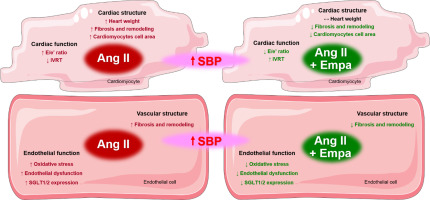
Empagliflozin prevents angiotensin II-induced hypertension related micro and macrovascular endothelial cell activation and diastolic dysfunction in rats despite persistent hypertension: Role of endothelial SGLT1 and 2
Source : https://www.sciencedirect.com/science/article/pii/S1537189122001446?via=ihub
SGLT2 inhibitors (SGLT2i) showed pronounced beneficial effects in patients with heart failure but the underlying mechanisms remain unclear. We evaluated the effect of empagliflozin, selective SGLT2i, on hypertension-induced cardiac and...
Conclusion: Thus, the SGLT2i effectively attenuated the deleterious impact of Ang II-induced hypertension on target organs including cardiac diastolic dysfunction and remodeling, and endothelial cell activation and pro-atherosclerotic, pro-fibrotic and pro-remodeling responses in macro and microvessels despite persistent hypertension.
Share
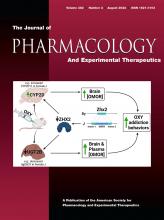
Empagliflozin improves the microRNA signature of endothelial dysfunction in patients with HFpEF and diabetes
Source : https://jpet.aspetjournals.org/content/early/2022/07/25/jpet.121.001251
Endothelial dysfunction represents a key mechanism underlying heart failure with preserved ejection fraction (HFpEF), diabetes mellitus (DM), and frailty. However, reliable biomarkers to monitor endothelial dysfunction in these patients are...
Significance Statement: We have identified for the first time a signature of microRNA functionally involved in the regulation of endothelial function that is significantly regulated in frail patients with HFpEF and diabetes. The treatment with the SGLT2 inhibitor empagliflozin caused a modification of some microRNA in a direction that was...
Share
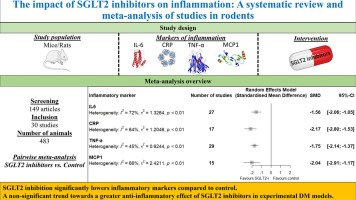
The impact of SGLT2 inhibitors on inflammation: A systematic review and meta-analysis of studies in rodents
Source : https://www.sciencedirect.com/science/article/pii/S1567576922005641?via=ihub
SGLT2 inhibition has resulted in favorable cardiorenal outcomes. * Anti-inflammatory actions have been implicated in their pleiotropic effects. * No data on inflammatory parameters are available to date from the...
Conclusion: The present meta-analysis suggests that SGLT2 inhibition results in reduction of inflammatory markers in animal models, further validating the suggested anti-inflammatory mechanism of action.
Share

SGLT2 Inhibitors: New Hope for the Treatment of Acute Myocardial Infarction? - American Journal of Cardiovascular Drugs
Source : https://link.springer.com/article/10.1007/s40256-022-00545-6
Among all of the new antidiabetic drugs, an increasing number of studies have evaluated the relationship between the sodium-glucose cotransporter 2 inhibitors (SGLT2i) and acute myocardial infarction (AMI).
Conclusion/Relevance: This is a review of the clinical and preclinical effects of SGLT2i, focusing on available data on the effects of SGLT2i in AMI patients with a brief overview of ongoing trials.
Share