

Heart Failure Connect
Profile Image
  • Saved
The Western and Chinese exercise training for blood pressure reduction among hypertensive patients: An overview of systematic reviews - PubMed

The Western and Chinese exercise training for blood pressure reduction among hypertensive patients: An overview of systematic reviews - PubMed

Source : https://pubmed.ncbi.nlm.nih.gov/36946438/

Hypertension remains the world's leading cause of premature death. Interventions such as exercise, diet modification, and pharmacological therapy remain the mainstay of hypertension treatment. Numerous systematic reviews and meta-analyses demonstrated...

This overview of 39 systematic reviews found both Western (aerobic, resistance) and Chinese (Tai Chi, Qigong, Baduanjin) exercises significantly reduce blood pressure, demonstrating comparable antihypertensive benefits and suitability for middle-aged and elderly patients.

Profile Image
  • Saved
Hepatic Venous Outflow Reconstruction Directly Into the Right Atrium - PubMed

Hepatic Venous Outflow Reconstruction Directly Into the Right Atrium - PubMed

Source : https://pubmed.ncbi.nlm.nih.gov/31801445/

During the natural course of the disease, venous collaterals form as chronic thrombosis extends into the vena cava. The vena cava can be safely resected in these patients to facilitate...

In three Budd–Chiari syndrome patients undergoing living-donor liver transplantation, hepatic venous outflow was successfully reconstructed directly into the right atrium, enabling effective drainage without vena cava replacement and showing long-term graft patency.

Profile Image
  • Saved
Bridging gaps in CHD care: pharmacologic advances and research needs in congenital heart disease

Congenital heart disease (CHD) remains the leading cause of death from birth defects worldwide. While survival exceeds 90% in high-income countries, many patients—particularly where surgery is limited—rely on pharmacologic management. Treatments often reflect adult heart failure regimens, targeting shared mechanisms like neurohormonal activation and cardiac remodeling.

Highlights:

  • ACE inhibitors, ARBs, beta-blockers, and diuretics to manage heart failure and ventricular dysfunction
  • Endothelin receptor antagonists, PDE-5 inhibitors, prostaglandins, and sGC stimulators for pulmonary arterial hypertension (PAH)
  • Digoxin, antiarrhythmics, and NSAIDs as adjunctive therapies for symptoms, arrhythmias, and ductal patency
  • Up to 85% of cardiovascular drugs in children are used off-label due to lack of pediatric-specific trials

What Sets This Study Apart:

This review consolidates pharmacologic strategies tailored to the complexity of CHD across age groups and comorbidities. It emphasizes treatment rationale, dosing nuances, and highlights critical evidence gaps that affect pediatric prescribing.

Limitations:

Current practice leans heavily on adult data. Clinical trials for pediatric CHD are scarce (<0.45% of NIH-funded CV trials), limiting evidence-based dosing, safety, and outcome data in children.

How do you balance limited pediatric trial data with the need for evidence-based care in CHD? What role could personalized, genomics-driven approaches play in shaping future outcomes?


Profile Image
  • Saved
The effectiveness and perceived value of feedback used in cardiac arrest simulation education: a mixed-method systematic review - PubMed

The effectiveness and perceived value of feedback used in cardiac arrest simulation education: a mixed-method systematic review - PubMed

Source : https://pubmed.ncbi.nlm.nih.gov/41074008/

Feedback in cardiac arrest simulation education is just as important as the simulation itself and should align with the learner's educational objectives. There is a notable underreporting of integral non-technical...

This mixed-method review found that both human and device-based feedback improve cardiac arrest simulation performance. Objective, device-based feedback is preferred, but non-technical aspects and qualitative perspectives remain underexplored in current research.

Profile Image
  • Saved
Currently managed US prevalence of cutaneous venous malformations (cVMs): a nationally representative, retrospective, real-world, subject-blinded, physician-observational probability study - PubMed

Currently managed US prevalence of cutaneous venous malformations (cVMs): a nationally representative, retrospective, real-world, subject-blinded, physician-observational probability study - PubMed

Source : https://pubmed.ncbi.nlm.nih.gov/41057921/

While cVM is rare, it affects a substantial number of individuals across age groups in the U.S. These findings underscore the need for improved access to care and the development...

A nationally representative physician survey estimated approximately 194,000 U.S. patients with cutaneous venous malformations, revealing a 0.06% prevalence and emphasizing unmet therapeutic needs, diagnostic challenges, and the lack of approved treatments for this rare vascular anomaly.

Profile Image
  • Saved

Did you know? A Bulgarian study found 79 of 142 ADR reports on cardiovascular drugs were serious. Sartans like valsartan were linked to melanoma and other cancers within 2–5 years. Statins and ACE inhibitors also showed alarming reactions like MI, heart failure, and arrhythmia—calling for more vigilant prescribing and follow-up.

Could awareness of serious ADRs like cancer from sartans influence your approach to monitoring patients and selecting cardiovascular treatments?

 NCCN Guidelines

Could awareness of serious ADRs like cancer from sartans influence your approach to monitoring patients and selecting cardiovascular treatments?

Profile Image
  • Saved
Background Image DesktopBackground Image Mobile

Genetic mutations were found in 71% of arrhythmia patients with cardiac devices. Variants in TMEM43 and titin (TTN) are linked to poor CRT outcomes. Personalised selection, such as using transvenous ICDs for ACM, improves prognosis and care.

Leverage genetics to tailor cardiac care

Profile Image
  • Saved
case study


Patient background

A 68-year-old man with a history of hypertension and type 2 diabetes presents with acute decompensated heart failure, reporting progressive dyspnea, two-pillow orthopnea, and bilateral lower extremity edema. He has a 5-year history of chronic heart failure with reduced ejection fraction (HFrEF) but has only been on loop diuretics for the past year, with no other components of guideline-directed medical therapy (GDMT) prescribed. His family history is notable for premature cardiovascular deaths in first-degree relatives.

Assessment and diagnosis 

On exam, the patient had diminished breath sounds, bilateral basal crackles, elevated jugular venous pressure, and pitting edema to the mid-shins. His oxygen saturation was 95% on room air. Echocardiogram revealed a reduced left ventricular ejection fraction (LVEF) of 25%, confirming HFrEF. Laboratory evaluation showed serum creatinine 1.4 mg/dL, eGFR 48 ml/min/1.73m², and potassium 4.2 mEq/L. Following treatment with intravenous loop diuretics, he achieved near-euvolemia and maintained a stable systolic BP of 115 mmHg without requiring inotropic support. Final diagnosis: acute on chronic HFrEF. Plans were made to initiate GDMT during hospitalization and to schedule outpatient follow-up for reassessment and titration.

  1. How do you initiate and optimize guideline-directed medical therapy in acute decompensated heart failure?
  2. How do you integrate newer agents like SGLT2 inhibitors into established GDMT sequencing in your practice?
Profile Image
  • Saved

Interatrial shunt implantation was safe in HF patients but showed benefit only in reduced LVEF, while worsening outcomes in preserved LVEF.

Profile Image
  • Saved
Consequences of Discontinuing Long-Term Drug Treatment in Patients With Heart Failure and Reduced Ejection Fraction - PubMed

Consequences of Discontinuing Long-Term Drug Treatment in Patients With Heart Failure and Reduced Ejection Fraction - PubMed

Source : https://pubmed.ncbi.nlm.nih.gov/39453366/

There is uncertainty regarding the clinical effects of discontinuation of drugs for heart failure after long-term use. The withdrawal of long-term treatment can follow 1 of 4 distinct patterns: 1)...

Heart failure drug withdrawal often leads to clinical deterioration, with varied persistence of effects across agents. Evidence underscores avoiding treatment gaps and maintaining foundational therapies for optimal outcomes.

Profile Image
  • Saved
Cardiac Fibrosis in the Multi-Omics Era: Implications for Heart Failure - PubMed

Cardiac Fibrosis in the Multi-Omics Era: Implications for Heart Failure - PubMed

Source : https://pubmed.ncbi.nlm.nih.gov/40146800/

Cardiac fibrosis, a hallmark of heart failure and various cardiomyopathies, represents a complex pathological process that has long challenged therapeutic intervention. High-throughput omics technologies have begun revolutionizing our understanding of...

Multi-omics technologies unravel genetic, epigenetic, transcriptomic, proteomic, and metabolic mechanisms of cardiac fibrosis, revealing fibroblast heterogeneity, biomarkers, and therapeutic targets, driving precision medicine and personalized strategies for heart failure and cardiomyopathies.

Profile Image
  • Saved
Heart failure, inflammation and exercise - PubMed

Heart failure, inflammation and exercise - PubMed

Source : https://pubmed.ncbi.nlm.nih.gov/40520009/

Heart failure (HF) is a condition characterized by high morbidity, mortality, and a substantial healthcare burden, in which inflammation plays a pivotal role. This review provides a comprehensive overview of...

This review highlights inflammation’s central role in heart failure progression, discussing immune alterations, biomarkers, and signaling pathways, while emphasizing exercise’s therapeutic potential through anti-inflammatory modulation and personalized intervention strategies.

Profile Image
  • Saved
State of precision medicine for heart failure with preserved ejection fraction in a new therapeutic age - PubMed

State of precision medicine for heart failure with preserved ejection fraction in a new therapeutic age - PubMed

Source : https://pubmed.ncbi.nlm.nih.gov/39844745/

Heart failure with preserved ejection fraction (HFpEF) is defined by heart failure (HF) with a left ventricular ejection fraction (LVEF) of at least 50%. HFpEF has a complex and heterogeneous...

HFpEF is a complex, heterogeneous condition challenging to diagnose. Algorithms (H2FPEF, HFA-PEFF), phenotype clustering, and SGLT2 inhibitors aid management, while future research explores precision diagnostics and novel therapies.

Profile Image
  • Saved
Profile Image
  • Saved
Chronic Heart Failure and Coronary Artery Disease: Pharmacological Treatment and Cardiac Rehabilitation - PubMed

Chronic Heart Failure and Coronary Artery Disease: Pharmacological Treatment and Cardiac Rehabilitation - PubMed

Source : https://pubmed.ncbi.nlm.nih.gov/40005328/

Coronary artery disease is the leading cause of acute and chronic heart failure. Patients with heart failure and ischemic heart disease need a tailored assessment to define the appropriate treatment,...

Coronary artery disease drives heart failure. Comprehensive assessment and multidisciplinary management, including pharmacological therapy and cardiac rehabilitation, improve survival, reduce hospitalizations, and support tailored, guideline-directed care for fragile patients.

Profile Image
  • Saved
Extracorporeal cardiopulmonary resuscitation for refractory cardiac arrest - PubMed

Extracorporeal cardiopulmonary resuscitation for refractory cardiac arrest - PubMed

Source : https://pubmed.ncbi.nlm.nih.gov/40456239/

When conventional cardiopulmonary resuscitation (CCPR) cannot restore spontaneous circulation, the initiation of venoarterial extracorporeal membrane oxygenation during refractory cardiac arrest-known as extracorporeal CPR (ECPR)-might restore circulation and adequate tissue oxygenation....

ECPR, used when CCPR fails, can restore circulation and improve survival but faces limitations due to complexity, cost, and risks. Outcomes depend on patient factors, timing, and procedural effectiveness.

Profile Image
  • Saved
Maternal Serum Folate During Pregnancy and Congenital Heart Disease in Offspring - PubMed

Maternal Serum Folate During Pregnancy and Congenital Heart Disease in Offspring - PubMed

Source : https://pubmed.ncbi.nlm.nih.gov/39388179/

In this case-control study of CHD, low maternal serum folate levels in early to midpregnancy were associated with an increased CHD risk in offspring, and excessively high folate levels were...

Maternal folate levels showed a U-shaped association with CHD risk in offspring; both low and high levels increased risk, especially with concurrent vitamin B12 deficiency or elevated homocysteine.

Profile Image
  • Saved
Advancing Alzheimer's Research: Gender Differences, Cardiometabolic Risk, and Lifestyle Interventions.

At AAIC 2025, Dr. Heather Snyder, Senior Vice President of Medical and Scientific Relations at the Alzheimer's Association, highlights key findings on gender differences in Alzheimer’s disease, including women’s increased susceptibility following traumatic brain injury and the potential cognitive protection offered by managing cardiometabolic risk factors such as hypertension and diabetes.

Dr. Rachel Whitmer, Professor of Public Health Sciences and Neurology at UC Davis, presents results from the US POINTER study. This large-scale lifestyle intervention suggests that a structured program of diet, exercise, and cognitive engagement may delay cognitive aging over two years.

These insights underscore the importance of early, personalized, and holistic brain health strategies that span the entire adult lifespan.

Profile Image
  • Saved
How to handle polypharmacy in heart failure. A clinical consensus statement of the Heart Failure Association of the ESC - PubMed

How to handle polypharmacy in heart failure. A clinical consensus statement of the Heart Failure Association of the ESC - PubMed

Source : https://pubmed.ncbi.nlm.nih.gov/40091554/

The multiplicity of coexisting comorbidities affecting patients with heart failure (HF), together with the availability of multiple treatments improving prognosis in HF with reduced ejection fraction, has led to an...

Polypharmacy in heart failure patients increases risks of poor adherence, adverse reactions, and hospitalizations. This consensus advocates multidisciplinary strategies to optimize treatment, reduce redundancy, and enhance outcomes.

Profile Image
  • Saved
case study

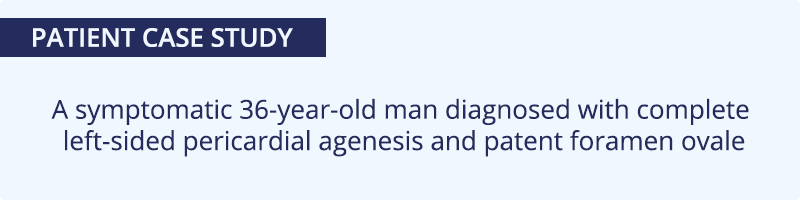
Patient Background: A 36-year-old man with well-controlled first-grade essential hypertension presented for a routine cardiovascular evaluation. He had a known heart murmur since childhood and had previously been told he might have a ventricular septal defect. Physical examination was unremarkable.

Assessment and Diagnosis: Initial ECG showed sinus rhythm (62 bpm), poor R-wave progression in leads V1–V4, and T wave inversions. Transthoracic echocardiography (TTE) revealed atypical cardiac positioning with suboptimal image acquisition. Atrial septal defect was suspected. Cardiac magnetic resonance (CMR) imaging delineated complete left-sided pericardial agenesis—demonstrating the heart displaced laterally and posteriorly into the left hemithorax, lung interposition between the great vessels, and absence of the left-sided pericardium. A patent foramen ovale (PFO) without significant right-to-left shunting was also identified.

Suggested Treatment Plan and Patient Education: No treatment was advised for the pericardial defect given the patient’s asymptomatic status. However, the potential risk of paradoxical embolism through the PFO was discussed, and closure of the defect was considered. Patient education focused on recognizing signs of cryptogenic stroke and understanding the clinical implications of the PFO.

Follow-up: Annual echocardiographic follow-up was recommended. At 6 months, the patient remained asymptomatic.

  1. Why was CMR essential in diagnosing pericardial agenesis in this asymptomatic patient? Answer CMR delineated heart displacement, lung interposition, and absence of pericardium—details not discernible on suboptimal TTE—making it essential for confirming the diagnosis.
  2. What is the management for asymptomatic pericardial agenesis with a PFO? Answer Asymptomatic pericardial agenesis requires no treatment. However, the PFO may increase stroke risk, and closure may be considered to prevent paradoxical embolism.
Profile Image