


Thromboinflammation in cardiovascular disease: lessons learned for the management of hypertension, heart failure, and aortic valve stenosis - PubMed
Source : https://pubmed.ncbi.nlm.nih.gov/35979817/
doi: 10.1093/eurheartj/ehac459. Online ahead of print. 1 Department of Cardiology, University Medical Center Mainz, Langenbeckstraße 1, 55131 Mainz, Germany. 2 Center for Thrombosis and Hemostasis, University Medical Center Mainz, Mainz,...
Conclusion/Relevance: Establishing effective and safe therapies will help to not only improve treatment of hypertension itself, but also to address the adverse outcomes of arterial hypertension such as aortic aneurysm, renal failure, heart failure, and stroke which are the unevitable consequences of this chronic systemic exposure to...
Share





Empagliflozin for Patients with Heart Failure and Type 2 Diabetes Mellitus: Clinical Evidence in Comparison with Other Sodium-Glucose Co-transporter-2 Inhibitors and Potential Mechanism - PubMed
Source : https://pubmed.ncbi.nlm.nih.gov/35969357/
Heart failure remains a leading cause of morbidity and mortality globally and has been recognized as a common complication of diabetes, especially type 2 diabetes mellitus. Heart failure occurs in...
Conclusion/Relevance: Herein, we critically reviewed the clinical evidence of empagliflozin for patients with heart failure and type 2 diabetes mellitus with the comparison with other sodium-glucose co-transporter-2 inhibitors and potential mechanism to provide the optimal and evidence-based management for patients with established heart failure...
Share
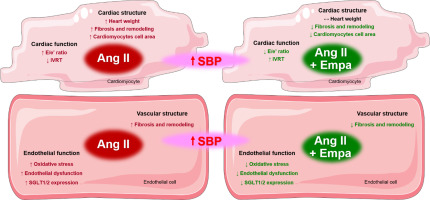
Empagliflozin prevents angiotensin II-induced hypertension related micro and macrovascular endothelial cell activation and diastolic dysfunction in rats despite persistent hypertension: Role of endothelial SGLT1 and 2
Source : https://www.sciencedirect.com/science/article/pii/S1537189122001446?via=ihub
SGLT2 inhibitors (SGLT2i) showed pronounced beneficial effects in patients with heart failure but the underlying mechanisms remain unclear. We evaluated the effect of empagliflozin, selective SGLT2i, on hypertension-induced cardiac and...
Conclusion: Thus, the SGLT2i effectively attenuated the deleterious impact of Ang II-induced hypertension on target organs including cardiac diastolic dysfunction and remodeling, and endothelial cell activation and pro-atherosclerotic, pro-fibrotic and pro-remodeling responses in macro and microvessels despite persistent hypertension.
Share
Empagliflozin improves the microRNA signature of endothelial dysfunction in patients with HFpEF and diabetes
Source : https://jpet.aspetjournals.org/content/early/2022/07/25/jpet.121.001251
Endothelial dysfunction represents a key mechanism underlying heart failure with preserved ejection fraction (HFpEF), diabetes mellitus (DM), and frailty. However, reliable biomarkers to monitor endothelial dysfunction in these patients are...
Significance Statement: We have identified for the first time a signature of microRNA functionally involved in the regulation of endothelial function that is significantly regulated in frail patients with HFpEF and diabetes. The treatment with the SGLT2 inhibitor empagliflozin caused a modification of some microRNA in a direction that was...
Share
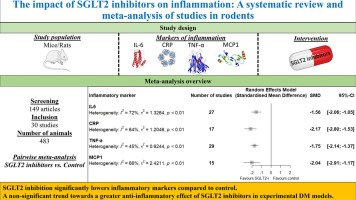
The impact of SGLT2 inhibitors on inflammation: A systematic review and meta-analysis of studies in rodents
Source : https://www.sciencedirect.com/science/article/pii/S1567576922005641?via=ihub
SGLT2 inhibition has resulted in favorable cardiorenal outcomes. * Anti-inflammatory actions have been implicated in their pleiotropic effects. * No data on inflammatory parameters are available to date from the...
Conclusion: The present meta-analysis suggests that SGLT2 inhibition results in reduction of inflammatory markers in animal models, further validating the suggested anti-inflammatory mechanism of action.
Share