


Evaluation and management of COVID-19-related severity in people with type 2 diabetes
Source : https://drc.bmj.com/content/9/1/e002299
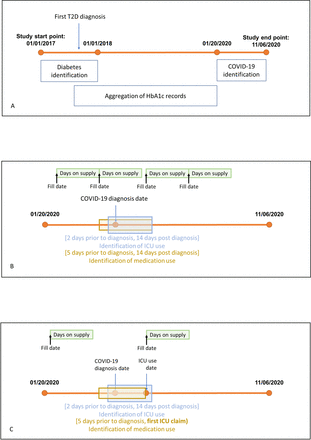
Introduction People with type 2 diabetes (T2D) have an increased rate of hospitalization and mortality related to COVID-19. To identify ahead of time those who are at risk of developing...
Conclusions: Two to three-year longitudinal glycemic level is independently associated with COVID-19-related severity in people with T2D. Here, we present a potential method to use HbA1c history, which presented a stronger association with COVID-19 severity than single-point HbA1c, to identify in advance those more at risk of intensive care due...
Researchers report novel findings for breast cancer patients with obesity, diabetes
Source : https://www.eurekalert.org/news-releases/935708
Obesity, insulin resistance and Type 2 diabetes are risk factors for breast cancer in post-menopausal women. The metabolic and inflammatory complications of obesity have a role in the formation of...
"“We have identified a potential biological difference that might explain this higher risk and inform clinical decision making. This novel biology may also suggest new drugs or treatments to reduce risk for metastasis in cancer patients who are also obese and diabetic,” explained corresponding author Gerald V. Denis, PhD, professor of...

The Type 2 Diabetes Factor Methylglyoxal Mediates Axon Initial Segment Shortening and Alters Neuronal Function at the Cellular and Network Levels
Source : https://www.eneuro.org/content/8/5/ENEURO.0201-21.2021
Recent evidence suggests that alteration of axon initial segment (AIS) geometry (i.e., length or location along the axon) contributes to CNS dysfunction in neurological diseases. For example, AIS length is...
"Significance Statement- Small changes in the structure of the axon initial segment (AIS) affect neuronal function and may be a key mediator of neurological complications in various disease states. However, the specific disease factors that mediate structural changes at the AIS are relatively unknown. This is the first study to show that...
Genome-wide association analyses highlight etiological differences underlying newly defined subtypes of diabetes - Nature Genetics
Source : https://www.nature.com/articles/s41588-021-00948-2
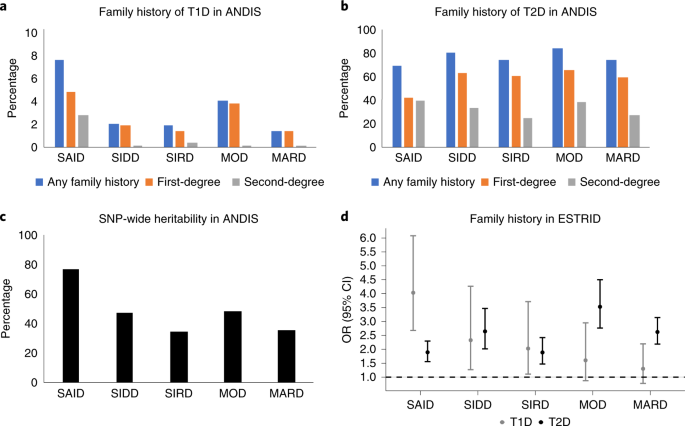
Type 2 diabetes has been reproducibly clustered into five subtypes with different disease progression and risk of complications; however, etiological differences are unknown. We used genome-wide association and genetic risk...
We show that subtypes differ with regard to family history of diabetes and association with GRS for diabetes-related traits. The severe insulin-resistant subtype was uniquely associated with GRS for fasting insulin but not with variants in the TCF7L2 locus or GRS reflecting insulin secretion. Further, an SNP (rs10824307) near LRMDA was...
Highlights:
- People with type 2 diabetes have high risks of all-cause mortality and vascular complications.
- Compared to those with late-onset diabetes (disease onset after 60 years of age), persons with young-onset (disease onset before 40) and early-onset (disease onset between 40 and 60) type 2 diabetes are associated with further excess...