
micro-community-banner
 
  • Saved
Addressing treatment nonadherence in children with ADHD

Adherence to Attention Deficit Hyperactivity Disorder (ADHD) medication among the pediatric population is low (≈64%). Nonadherence is related to various factors, including those involving caregivers, the healthcare system, medications, and children themselves. It’s important to address these factors to enhance long-term outcomes.

Experts recommend various interventions to address factors that contribute to nonadherence, including:

  • Family education in cases when parents believe that the symptoms are not due to a psychiatric etiology
  • Family education when the use of ADHD medication is stigmatized by the family
  • Behavior strategies (eg, Cognitive-Behavioral Therapy) when there is conflict between the caregiver and child regarding treatment or when the child refuses to take the ADHD medication
  • Behavior strategies (eg, behavioral parent training, multisystemic therapy for conduct disorder) when comorbidities (eg, oppositional defiant disorder, conduct disorder) interfere with the child’s ability to take ADHD medication
  • Clinician intervention in cases of medication ineffectiveness, adverse events, multiple daily doses/onerous medication regimen, and a paucity of medication titration

When ADHD drugs are more effective, medication adherence improves. Dosing factors and medication titration are also associated with improved adherence. Using a streamlined dose regimen can increase adherence, with patients prescribed long-acting formulations having higher rates of adherence than those prescribed short-acting formulations.

Long-acting stimulants may yield more balanced and sustained effects on ADHD symptoms throughout the day. The burden of taking multiple daily doses and the stigma of mid–school-day dosing could also attenuate adherence in children taking short-acting formulations.

What is your clinical experience with long-acting stimulants for ADHD? What factors could boost adherence in your patients?

Show More Comments

  • Saved
A Summary of the Annual International Conference on ADHD

The 2023 Annual International Conference on Attention-Deficit/Hyperactivity Disorder (AIC ADHD) was hosted by Children and Adults with Attention-Deficit/Hyperactivity Disorder (CHADD), the Attention Deficit Disorder Association, and the ADHD Coaches Organization. The dynamic meeting is the largest international conference on ADHD and took place in Baltimore from Nov. 30 through Dec. 2, 2023, followed by an online conference from Dec. 5 through 6, 2023. 

  • Saved
On the Behaviour-Altering Effect of Horses and Dogs in the Therapy of Attention-Deficit/Hyperactivity Disorders

On the Behaviour-Altering Effect of Horses and Dogs in the Therapy of Attention-Deficit/Hyperactivity Disorders

Source : https://pubmed.ncbi.nlm.nih.gov/38051059/

The effects of horses and dogs on disorder-specific behavior were examined in amovement-oriented behavioral training for children and adolescents with attention-deficit/hyperactivity disorders.

In patients with ADHD, equine-assisted therapy session reduced symptom behavior. The results of accelerometry indicate a superiority of equine-assisted interventions, as physical activity in the equine-assisted setting was lower than in the settings assisted by dog or human, which is considered a desired behavior change in hyperactivity.

  • Saved
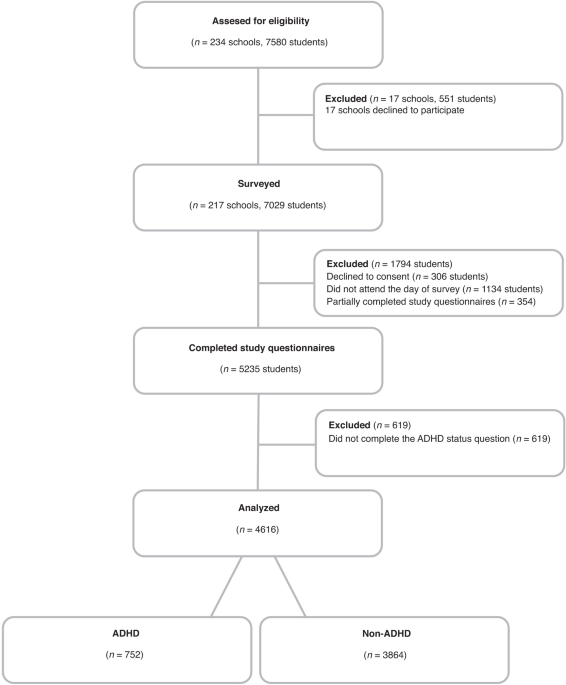
Attention-Deficit Hyperactivity Disorder Is Associated With Disordered Eating in Adolescents

Attention-Deficit Hyperactivity Disorder Is Associated With Disordered Eating in Adolescents

Source : https://www.nature.com/articles/s41390-023-02925-3

Attention-deficit hyperactivity disorder (ADHD) and disordered eating (DE) are both highly prevalent among adolescents, but their relationship is understudied. This study examines their possible association in a nationally representative sample...

This study examined the association between ADHD and disordered eating in adolescents using the SCOFF questionnaire. Following adjustment for sociodemographic variables and BMI z-score, ADHD was associated with a 41% increased odds for disordered eating.

  • Saved
Annual International Conference on ADHD 2023

Hosted by Children and Adults with Attention-Deficit/Hyperactivity Disorder (CHADD), the Attention Deficit Disorder Association, and the ADHD Coaches Organization, the 2023 Annual International Conference on Attention-Deficit/Hyperactivity Disorder (AIC ADHD) is taking place in Baltimore from Nov. 30 through Dec. 2, 2023. The in-person meeting will be followed by an online conference with virtual connection to speakers and sessions on Dec. 5 to 6.

This year’s conference theme is “Connect. Learn. Thrive.” and features 125 onsite and 65 online sessions, including workshops, peer-to-peer discussion groups, interactive activities, and networking events for adults with ADHD, parents and caregivers of children with ADHD, educators, coaches, clinicians, and therapists who diagnose and treat ADHD.