


Asma Shaukat, MD, Professor of Medicine at NYU Grossman School of Medicine and outgoing Chair of the Clinical Practice Section for the AGA Council, discussed 13-year Nordic trial findings showing reduced colorectal cancer incidence with colonoscopy screening, along with emerging data on GLP-1 therapies in fatty liver disease and cirrhosis. Bruce Sands, MD, Chief of Gastroenterology and Professor of Medicine at the Icahn School of Medicine at Mount Sinai, presented findings from the DUET-CD study evaluating combination therapy in Crohn’s disease.
Bridging the gap between policy and practice in adolescent health services: evidence from Indian primary public health centers. - PubMed
Source : https://pubmed.ncbi.nlm.nih.gov/42469808
India's adolescent health services face gaps, with only 12.5% of facilities dedicated. Addressing privacy, staff shortages, and leveraging digital health are crucial.
Despite RKSK, only 12.5% of facilities offer adolescent services. Barriers include privacy issues and staff shortages; opportunities lie in digital health and community engagement.
Laparoscopic removal of swallowable intragastric balloon and conversion to Roux-en-Y gastric bypass with concurrent hiatoplasty: a case report. - PubMed
Source : https://pubmed.ncbi.nlm.nih.gov/42434064
This case report discusses resolving severe balloon intolerance by identifying hiatal pathology and considering surgical options, highlighting potential interventions for obesity management.
Severe intolerance to swallowable balloons in a 41-year-old man with obesity may indicate hiatal issues. Laparoscopic removal, hiatal repair, and gastric bypass were effective interventions.
Rethinking LPCAT3 roles in human disease: broadening perspectives beyond ferroptosis. - PubMed
Source : https://pubmed.ncbi.nlm.nih.gov/42399667
Discover LPCAT3's role in phospholipid remodeling and its impact on diabetes and NAFLD, relevant to primary care.
LPCAT3 remodels phospholipids, impacting autophagy, endoplasmic reticulum homeostasis, and inflammation, relevant to diabetes and NAFLD in primary care.
Study protocol for a 15-year follow-up of a randomized controlled trial on lifestyle intervention in pregnancy: assessing long-term effects on body composition, metabolic traits, and mental health in mothers and offspring. - PubMed
Source : https://pubmed.ncbi.nlm.nih.gov/41535891
Explore the 15-year impact of maternal lifestyle interventions during pregnancy on childhood obesity using DXA scans and glucose monitoring in a follow-up trial.
The study examines long-term effects of pregnancy lifestyle interventions on offspring using DXA scans and glucose monitoring in a follow-up of a randomized controlled trial.
A Healthy Diet Intervention Alters Food Preferences and Eating Behaviours Without Changing Appetite, Adipokines or Glucose Homoeostasis. - PubMed
Source : https://pubmed.ncbi.nlm.nih.gov/42318824
Discover how a 12-week Mediterranean diet affects food preferences and eating behaviors without impacting appetite or metabolic markers in individuals at metabolic risk.
A Mediterranean diet intervention significantly reduced uncontrolled eating (p=0.0226) and increased cognitive restraint (p=0.0004) without altering metabolic markers.
Dr. Nanette Rowley, General Program Chair for ACOG 2026 (Washington, DC), highlighted strong engagement across sessions on menopause, emergency obstetrics, and perinatal mental health, alongside robust well-being programming. The first-place research award (McClain et al., Henry Ford Health) revealed diagnostic imprecision in intra-amniotic infection, with poor concordance between clinical criteria and placental pathology underscoring the need for standardized protocols. A Penn State study by medical student Arisha Tariq found 45% of THC-exposed neonates required NICU admission, citing prematurity, respiratory distress, and neonatal abstinence syndrome as key concerns.
Longitudinal analysis of short-chain fatty acid profiles in stool of sleeve gastrectomy patients. - PubMed
Source : https://pubmed.ncbi.nlm.nih.gov/42276984
Discover how sleeve gastrectomy affects gut microbiota, altering SCFA profiles over 12 months and influencing metabolic and psychological outcomes.
Sleeve gastrectomy alters faecal SCFA profiles over 12 months, with decreased major SCFAs and increased branched SCFAs, suggesting gut microbiota shifts.
-
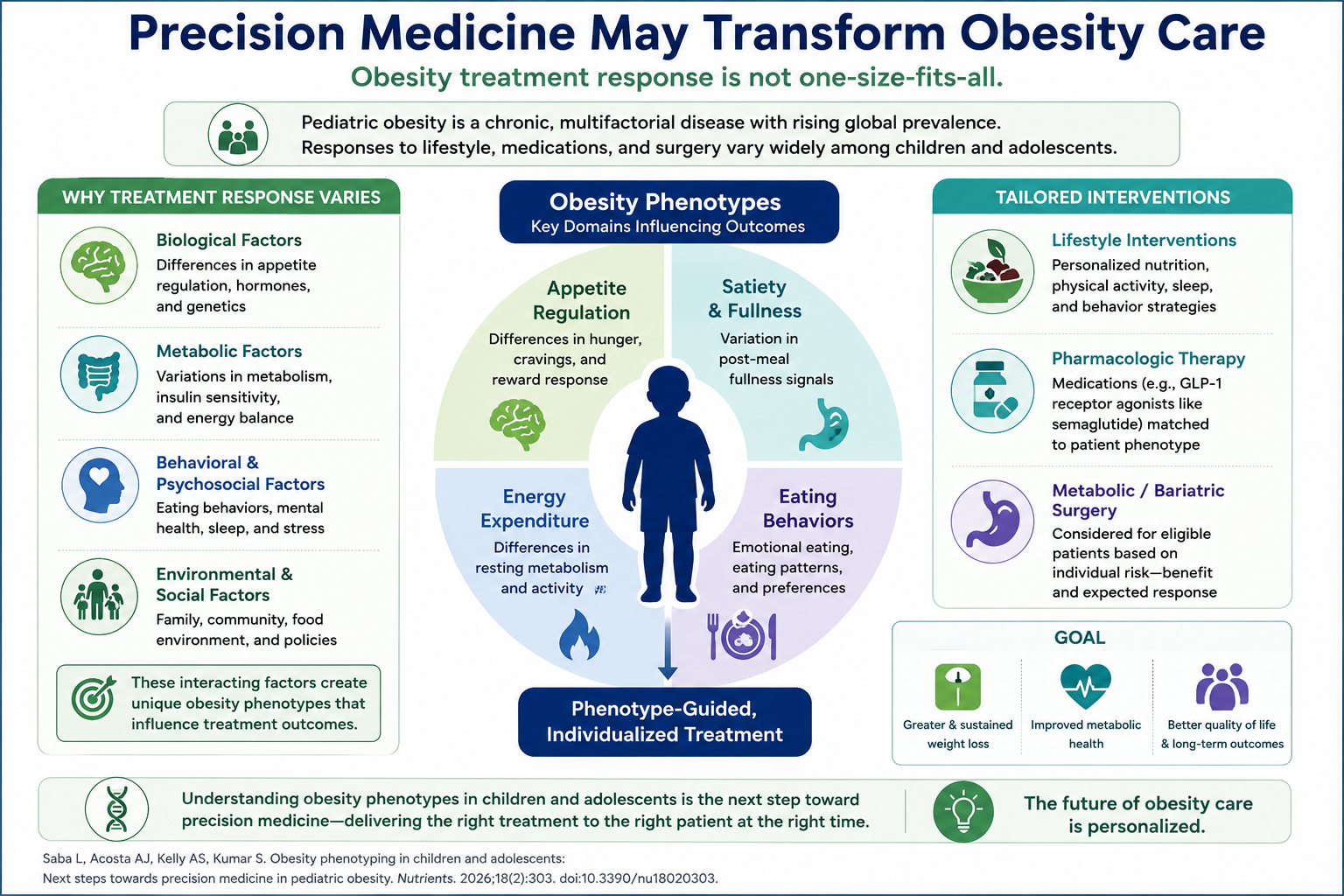
BRETT NILE3moyes it will, We have crossed the Rubicon on obesity treatment. We have new tools and now it's time to learn how to use them. -
Temeki Hill3moObesity care should be personalized anyways for each individual person whether child, teenager, adult or the elderly. As stated above many factors influence obesity, social factors are huge because Show More
Show More Comments
Physical activity and anthropometric factors as predictors for postural stability in children - PubMed
Source : https://pubmed.ncbi.nlm.nih.gov/42203825/
To determine whether anthropometric factors and different domains of physical activity are associated with postural stability outcomes in children. Ninety-five children aged 7-18 years were enrolled in a cross-sectional observational...
Cross-sectional study found that postural stability in children is influenced by age, physical activity, physical education performance, and body weight, with overweight/obesity associated with poorer balance measures and sports participation potentially mitigating some deficits.
Glucagon-Like Peptide-1 Receptor Agonist and Hyponatremia: A Potential Association - PubMed
Source : https://pubmed.ncbi.nlm.nih.gov/42149072/
Clinicians should consider monitoring serum sodium in patients receiving GLP-1 receptor agonists, particularly when used alongside medications affecting sodium balance, such as thiazide-like diuretic agents.
Case suggests a potential association between tirzepatide and recurrent hyponatremia, particularly with concomitant chlorthalidone use, highlighting the importance of serum sodium monitoring during GLP-1 receptor agonist therapy.
Leptin and leptin resistance in obesity: current evidence, mechanisms and future directions - PubMed
Source : https://pubmed.ncbi.nlm.nih.gov/40932169/
Leptin, a key adipokine regulating energy homeostasis, has been extensively studied for its potential in the management of obesity. However, its therapeutic efficacy is often limited due to leptin resistance....
This review examines leptin biology and mechanisms of leptin resistance in obesity, highlighting impaired signaling pathways, inflammation, and hyperleptinemia while discussing emerging strategies including leptin sensitization, combination therapies, and MC4R agonists.
How Obesity Complicates Breast Cancer Care: Insights From a Systematic Review of Case Reports - PubMed
Source : https://pubmed.ncbi.nlm.nih.gov/40568283/
The global rise in obesity has intersected with increasing breast cancer incidence, generating a critical need to understand how excess adiposity affects diagnostic accuracy, treatment delivery, and patient outcomes. Although...
This systematic review highlights how obesity complicates breast cancer care through diagnostic delays, surgical complications, altered drug metabolism, treatment toxicity, and multimorbidity, emphasizing the need for personalized obesity-specific management strategies.
Is there a link between cholesterol-lowering medications and atopic dermatitis? - PubMed
Source : https://pubmed.ncbi.nlm.nih.gov/41405359/
Effect of CLMs on AD is biologically plausible but clinically unproven. Signals of concern are most consistent for 3-hydroxy-3-methylglutaryl coenzyme A (HMG-CoA) reductase and Niemann-Pick C1-Like 1 (NPC1L1) inhibition, whereas...
Cholesterol-lowering drugs may influence atopic dermatitis via skin barrier effects, but evidence is inconclusive; statins/NPC1L1 inhibitors show concern, PCSK9 inhibitors may protect; prioritize cardiovascular benefits while monitoring dermatitis.
Most patients prescribed semaglutide lacked comprehensive pre-treatment screening, with only 1.8% fully assessed. Missing evaluations—especially for thyroid, pancreatic, and ocular risks—may increase the likelihood of severe complications despite known safety concerns.
Personalized Nutrition Strategies for Patients in the Intensive Care Unit: A Narrative Review on the Future of Critical Care Nutrition - PubMed
Source : https://pubmed.ncbi.nlm.nih.gov/40431399/
Introduction: Critically ill patients in intensive care units (ICUs) are at high risk of malnutrition, which can result in muscle atrophy, polyneuropathy, increased mortality, or prolonged hospitalizations with complications and...
Review highlights importance of early, personalized ICU nutrition using enteral feeding, adequate protein, and AI/metabolomics integration to improve outcomes, reduce complications, and enable precise, multidisciplinary nutritional care.
Did you know? Childhood obesity disrupts multiple endocrine pathways, leading to insulin resistance, hormonal imbalances, and increased risk of early-onset metabolic and cardiovascular complications. These changes can also impact growth, puberty, and long-term health trajectories.
Could early endocrine-focused interventions in obesity help prevent long-term metabolic and cardiovascular disease progression?

Could early endocrine-focused interventions in obesity help prevent long-term metabolic and cardiovascular disease progression?
Obesity accelerates cardiovascular ageing - PubMed
Source : https://pubmed.ncbi.nlm.nih.gov/40197620/
A global obesity pandemic, coupled with an increasingly ageing population, is exacerbating the burden of cardiovascular disease. Indeed, clinical and experimental evidence underscores a potential connection between obesity and ageing...
Obesity accelerates cardiovascular aging through shared mechanisms like inflammation and mitochondrial dysfunction; weight reduction and metabolic therapies may counteract these processes, reducing cardiovascular disease risk and improving longevity.
Obesity-related TyG indices, reflecting insulin resistance, were linked to higher risk of retinal arteriosclerosis. Findings highlight how metabolic dysfunction and poor cardiovascular health contribute to early microvascular injury, reinforcing the need for integrated risk assessment.