



11mo

GLP-1 help reduced wieight and correct blood sugar in type 2 diabetes,also reduced fatty liver disease,ckd,and reduce cariovasculat disaease

Source : https://pubmed.ncbi.nlm.nih.gov/39610545/
Further population-based studies focusing on national and international collaborations are needed to progress more practical strategies to face with obesity challenge in different age ranges.
This narrative review summarizes EMRI’s obesity research, emphasizing genetic, microbiota, nutritional, and herbal factors in weight management, and calls for personalized, collaborative, and population-based strategies to improve obesity prevention and treatment outcomes.
Endocrine dysfunction is an under-recognized but significant driver of morbidity and mortality in the critically ill. This review highlights how biomarkers enable earlier detection, diagnosis, and monitoring of life-threatening endocrine crises—such as adrenal insufficiency, thyroid storm, and hyperglycemic emergencies—that may initially present with non-specific symptoms.
Highlights:
• Biomarkers—classified as prognostic, predictive, pharmacodynamic, or exposure-related—help guide both diagnosis and treatment decisions.
• Established markers include TSH for thyroid disease, cortisol for adrenal insufficiency, IGF-1 for growth hormone deficiency, and HbA1c for glycemic status.
• Advantages include earlier, objective detection and individualized therapy; limitations involve sensitivity, clinical validation, and interpretive complexity.
• Emerging tools like extracellular vesicles, serum diiodotyrosine, and neutrophil gelatinase-associated lipocalin (NGAL) may offer precision diagnostics.
• Advances in multiplexed and ultra-sensitive detection platforms are improving accuracy and accelerating clinical adoption.
What sets this study apart:
It synthesizes current and emerging biomarker evidence, positioning these tools to shift critical care endocrinology from reactive to precision-guided, proactive management.
Limitations:
Many novel markers lack large-scale validation. Regulatory hurdles and workflow integration also limit clinical translation in intensive care.
How are you leveraging biomarkers to detect endocrine crises earlier in the ICU? Could multiplex technology help improve diagnostic accuracy and resource utilization in your unit?
Fun Fact! Statin-associated muscle symptoms (SAMS) occur in 10–29% of patients, typically presenting as myalgia or myositis in the thighs or calves. Severe cases like rhabdomyolysis are rare. Genetic variations, especially in the SLCO1B1 gene, have been linked to a higher risk of developing SAMS during statin treatment.
Could SLCO1B1 genetic testing support safer, more personalized statin prescribing?

Could SLCO1B1 genetic testing support safer, more personalized statin prescribing?


A 12-month RCT will assess if adding group-based nutritional education to standard care improves HbA1c in T2D patients. Covering shopping habits, plate planning, and hunger cues, the program targets glycemic control and broader metabolic outcomes.
Source : https://pubmed.ncbi.nlm.nih.gov/41100817/
Glucagon-like peptide-1 receptor agonists are increasingly used in the management of obesity and diabetes. Their potential risks, however, particularly regarding pancreatitis and pancreatic cancer, remain contentious. Despite numerous studies and...
Source : https://pubmed.ncbi.nlm.nih.gov/41061006/
Our findings suggest that people with obesity incur substantial costs related to the use of mental health care, yet less than half of the included COI studies reported mental health...
This systematic review highlights substantial but inconsistently reported mental health care costs among individuals with obesity, emphasizing the need for clearer cost attribution and integrated economic evaluation of obesity–mental health comorbidity.
Source : https://pubmed.ncbi.nlm.nih.gov/41041606/
Obesity has emerged as one of the most pressing global public health challenges of the 21st century. Obesity has reached epidemic proportions worldwide, with over 1 billion people classified as...
This comprehensive review examines global obesity trends, underlying genetic, behavioral, and environmental causes, and related non-communicable diseases, emphasizing evidence-based management, prevention strategies, and urgent multisectoral actions to mitigate the growing global obesity epidemic.
Obesity disrupts endocrine health through insulin resistance, chronic inflammation, and altered adipokine signaling. This narrative review explores how different dietary patterns influence hormonal balance in men and women.
Highlights:
What sets this study apart:
Unlike conventional reviews that focus on single nutrients, this synthesis examines whole dietary patterns and their interaction with sex-specific hormonal physiology. It emphasizes the importance of individualized nutrition plans based on reproductive and metabolic profiles, underscoring that one-size-fits-all approaches are inadequate for endocrine health.
Limitations:
As a narrative review, conclusions are drawn from existing literature rather than new clinical data. Long-term outcomes and sustainability of restrictive diets, such as ketogenic or very low-carbohydrate regimens, remain underexplored.
What role does gender play in how dietary choices influence endocrine health?
Source : https://pubmed.ncbi.nlm.nih.gov/39439572/
At the time of breast cancer diagnosis, most patients meet the diagnostic criteria to be classified as obese or overweight. This can significantly impact patient outcome: breast cancer patients with...
Obesity-linked hyperleptinemia promotes angiogenesis in breast cancer, fostering tumor growth and metastasis. This review highlights leptin’s role in the tumor microenvironment of obese patients.
Source : https://pubmed.ncbi.nlm.nih.gov/40789597/
Pharmacotherapy in obesity facilitates clinically meaningful weight loss and important improvements in obesity-related health complications. Clinicians who treat people with obesity with or without obesity-related health complications should appropriately use...
Updated Canadian guidelines recommend long-term, individualized pharmacotherapy alongside lifestyle therapy for obesity, with specific drug choices tailored to comorbidities and patient needs.
Source : https://pubmed.ncbi.nlm.nih.gov/40043689/
Over the last 30 years, our understanding of the causes of obesity has been transformed, and new, highly effective medicines for reducing weight have been developed. This remarkable progress marks...
Obesity is now recognized as a biologic disorder with effective new therapies, including GLP-1 and other pathways. Future treatments promise tailored approaches addressing diverse pathogenic mechanisms and patient subgroups.
Source : https://pubmed.ncbi.nlm.nih.gov/40305970/
Obesity is a worldwide epidemic affecting adults and children, regardless of their socioeconomic status. Significant progress has been made in understanding the genetic causes contributing to obesity, shedding light on...
Obesity is a global epidemic with genetic and lifestyle roots, causing widespread complications. Prevention, lifestyle changes, pharmacological advances, and surgery complement primary care roles in management and referral.
I generally offer Rx weight loss medications to all my pts who are qualified, many pts are reluctant and afraid of the side effects, most pts believe they can lose weight themself, coverage is still a major issue in my area.
Source : https://pubmed.ncbi.nlm.nih.gov/40215288/
The global increase in life expectancy has led to a concomitant rise in diagnoses of sarcopenia. At the same time, the epidemic levels of obesity have given rise to the...
Sarcopenic obesity, combining muscle loss and obesity, is rising globally. It affects not only older adults but also individuals with chronic disease or rapid weight loss, remaining underdiagnosed and undertreated.
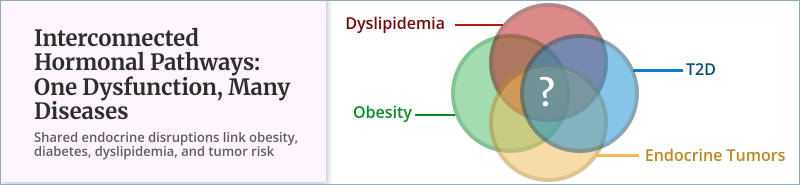
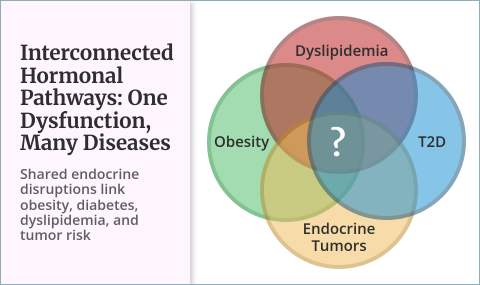


A landmark study in Lancet Diabetes & Endocrinology identified a T1D subtype in Sub-Saharan African youth and Black Americans lacking islet autoantibodies. This insulin-deficient form isn't autoimmune, urging revised diagnostic, prevention, and treatment strategies.
Did you know? A randomized crossover trial published in August 2025 demonstrated that a DASH diet modified for type 2 diabetes (DASH4D) significantly improved glycemic control. Adults with T2D on the DASH4D regimen experienced greater reductions in mean CGM glucose and increased time in the target range compared to standard U.S. dietary patterns. Improvements were most pronounced in participants with elevated baseline A1C.
Could evidence-based dietary frameworks like DASH4D enhance existing treatment plans for patients with complex metabolic profiles?

Could evidence-based dietary frameworks like DASH4D enhance existing treatment plans for patients with complex metabolic profiles?
Source : https://pubmed.ncbi.nlm.nih.gov/39838543/
A targeted and structured approach to the detection and treatment of sarcopenia and sarcopenic obesity can make a major contribution to the maintenance or improvement of these patients' functionality and...
Sarcopenia and sarcopenic obesity impair function, increase risks, and affect quality of life in aging populations. Early screening, resistance training, and nutritional interventions are essential for prevention and management.