

The Effects of Statin Therapy on Oxidized LDL and Its Antibodies: A Systematic Review and Meta-Analysis
Source : https://www.hindawi.com/journals/omcl/2022/7850659/
Background . Elevated serum low-density lipoproteins (LDL), the substrate for the formation of atherogenic oxidized LDLs (oxLDL), are a causal factor for atherosclerotic cardiovascular disease (ASCVD). Statins are well known...
Conclusion: Statin therapy decreases serum oxLDL concentrations but does not affect circulating levels of anti-oxLDL antibodies.
Share





Effect of the Early Application of Evolocumab on Blood Lipid Profile and Cardiovascular Prognosis in Patients with Extremely High-Risk Acute Coronary ...
Source : https://www.jstage.jst.go.jp/article/ihj/63/4/63_22-052/_article
Proprotein convertase subtilisin/kexin 9 (PCSK9) inhibitors significantly reduce low-density lipoprotein cholesterol (LDL-C) and improve the prognosis of patients with acute coronary syndrome (ACS). However, the feasibility and safety of early...
Conclusion/Relevance: In patients with extremely high-risk ACS with high levels of LDL-C, adding evolocumab to their treatment regimen as early as possible may enhance lipid lowering, increase the patient's LDL-C compliance rate in the short term, and improve cardiovascular prognosis but will not increase adverse reactions.
...
Share
Lipid Lowering Therapy: An Era Beyond Statins
Source : https://www.sciencedirect.com/science/article/abs/pii/S0146280622002390?via=ihub
Available online 31 July 2022, 101342 Dyslipidemia, specifically elevated LDL cholesterol levels, causes atherosclerotic cardiovascular disease (ASCVD) and increases the risk of myocardial infarction and stroke. Statins, a class of...
Conclusion/Relevance: Overall, although statins continue to be the gold standard, non-statin therapies are set to play an increasingly important role in managing dyslipidemia.
Share
-
 Lipid Management Connect3yrKey Points • Source: Current Problems in Cardiology • Conclusion: “This review explores non-statin lipid-lowering therapies and examines recent advances and emerging research. Over the previous decades, several lipid-lowering therapies, both as monotherapy and Show More
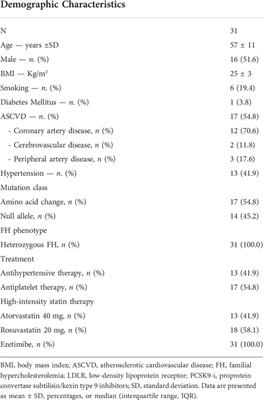
Effects of PCSK9 inhibitors on HDL cholesterol efflux and serum cholesterol loading capacity in familial hypercholesterolemia subjects: a multi-lipid-center real-world evaluation
Source : https://www.frontiersin.org/articles/10.3389/fmolb.2022.925587/full
Proprotein convertase subtilisin/kexin type 9 (PCSK9), beyond regulating LDL cholesterol (LDL-c) plasma levels, exerts several pleiotropic effects by modulating lipid metabolism in extrahepatic cells such as macrophages. Macrophage cholesterol homeostasis...
Conclusion: PCSK9-i treatment significantly increased HDL-CEC through ABCG1 and aqueous diffusion pathways and reduced the serum CLC in FH patients. The favorable effect of PCSK9-i on functional lipid profile could contribute to the cardiovascular benefit of these drugs in FH patients.
Share

PCSK9 Promotes Endothelial Dysfunction During Sepsis Via the TLR4/MyD88/NF-κB and NLRP3 Pathways - PubMed
Source : https://pubmed.ncbi.nlm.nih.gov/35930089/
Endothelial dysfunction often accompanies sepsis. We aimed to explore the role of PCSK9 in septic endothelial dysfunction. Sepsis was induced by lipopolysaccharide (LPS) treatment of human umbilical vein endothelial cells...
Relevance: Endothelial dysfunction often accompanies sepsis. We aimed to explore the role of PCSK9 in septic endothelial dysfunction.
Share