
Lipid Management Connect
Profile Image
  • Saved

made a Post

Cardiovascular Disease Risk Assessment & LDL-C Goal

Very high-risk patients with ASCVD are defined as having multiple major ASCVD events or one major ASCVD event and multiple other risk factors such as smoking, hypertension, diabetes, or persistent elevated LDL-C to name a few.1 While unclear exactly how many patients are considered very high-risk, separate studies show a range of 26-58% of ASCVD patients may be classified as very high-risk.2-3 The most recent ACC/AHA guideline recommends optimizing LDL-C management in very high-risk ASCVD patients with high-intensity statin therapy or maximally tolerated statin therapy.1 The guidelines further recommend using an LDL-C threshold of 70 mg/dL (1.8 mmol/L) in very high-risk ASCVD patients when considering the addition of nonstatins to statin therapy.1


  • What percentage of your own secondary prevention patients would you classify as being very high-risk?

  • Of those very high-risk patients, what percentage would you estimate are at goal utilizing statins alone?

  • Do you feel that 70 mg/dL LDL-C is low enough to prevent additional ASCVD events or do you target even lower? Should ACC/AHA LDL-C guidelines be adjusted to provide an LDL-C goal ≤55 mg/dL, similar to ESC4?


References:


  1. Grundy SM, Stone NJ, Bailey AL, et al. 2018 AHA/ACC/AACVPR/AAPA/ABC/ACPM/ADA/AGS/APhA/ASPC/NLA/PCNA Guideline on the Management of Blood Cholesterol: A Report of the American College of Cardiology/American Heart Association Task Force on Clinical Practice Guidelines. J Am Coll Cardiol 2019; 73(24):3168-3209

  2. Sajja A, Li HF, Spinelli KJ, et al. A simplified approach to identification of risk status in patients with atherosclerotic cardiovascular disease. American Journal of Preventive Cardiology 2021; (7): 100187

  3. Colantonio LD, Shannon ED, Orroth KK, et al. Ischemic Event Rates in Very-High-Risk Adults. Journal of the American College of Cardiology, 2019; 74(20): 2496-2507

  4. Mach F, Baigent C, Catapano A, et al. 2019 ESC/EAS Guidelines for the management of dyslipidaemias: lipid modification to reduce cardiovascular risk: The Task Force for the management of dyslipidaemias of the European Society of Cardiology (ESC) and European Atherosclerosis Society (EAS). 2020; 41(1): 111–188


Profile Image
  • 4yr
    approximately 50% of my pts are considered high risk, LDL goal for my pts with diabetes is <50, approximately 50% of my pts will reach the goal with statin monotherapy, Show More
  • 4yr
    There are only a few patients who have their first ASCVD event in the absence of multiple risk factors -- I think perhaps only about 20%; meaning that virtually all Show More

Show More Comments

  • Saved
Hyperlipidemia patients carrying LDLR splicing mutation c.1187-2A>G respond favorably to rosuvastatin and PCSK9 inhibitor evolocumab - Molecular Genetics and Genomics

Hyperlipidemia patients carrying LDLR splicing mutation c.1187-2A>G respond favorably to rosuvastatin and PCSK9 inhibitor evolocumab - Molecular Genetics and Genomics

Source : https://link.springer.com/article/10.1007/s00438-022-01892-4

Mutations in the LDL receptor gene LDLR cause familial hypercholesterolemia (FH); however, the pharmacogenomics of specific LDLR mutations remains poorly understood. The goals of this study were to identify the...


Conclusion/Relevance: These results suggest that combined treatment with rosuvastatin (but not lovastatin or ezetimibe) and evolocumab can control LDL-C to meet the LDL-C treatment goal for patients with LDLR splicing mutation c.1187-2A>G.

Profile Image
  • Saved
Efficacy and Safety of Proprotein Convertase Subtilisin/Kexin Type 9 Inhibitors as Adjuvant Treatments for Patients with Hypercholesterolemia Treated with Statin: A Systematic Review and Network Meta-analysis

Efficacy and Safety of Proprotein Convertase Subtilisin/Kexin Type 9 Inhibitors as Adjuvant Treatments for Patients with Hypercholesterolemia Treated with Statin: A Systematic Review and Network Meta-analysis

Source : https://www.frontiersin.org/articles/10.3389/fphar.2022.832614/full

Background: The proprotein convertase subtilisin/kexin type 9 (PCSK9) inhibitors are potent LDL-C lowering agents. However, few head-to-head studies evaluated the efficacy on the lowering in other atherogenic apolipoproteins and safety...


Conclusion: PCSK9 inhibitors showed a significant effect on the reduction in LDL-C, ApoB, and Lp(a) levels in statin-treated patients. Evolocumab 140 mg Q2W showed significantly larger degrees of LDL-C, ApoB, and Lp(a) reduction.

Profile Image
  • Saved
Acute Effect of Evolocumab on Lipoprotein(a) Level and Inflammation in Patients with Coronary Artery Disease - PubMed

Acute Effect of Evolocumab on Lipoprotein(a) Level and Inflammation in Patients with Coronary Artery Disease - PubMed

Source : https://pubmed.ncbi.nlm.nih.gov/35448076/

doi: 10.3390/jcdd9040101. 1 Division of Cardiology, Department of Internal Medicine, Kyung Hee University Hospital, Kyung Hee University, Seoul 02447, Korea. 2 Department of Medicine, Graduate School of Medicine, Kyung Hee...


Conclusions: One-time PCSK9 inhibitor treatment may be effective in lowering Lp(a) levels in Korean patients in the short term.

Profile Image
  • Saved
PCSK9 inhibition protects against myocardial ischemia-reperfusion injury via suppressing autophagy

PCSK9 inhibition protects against myocardial ischemia-reperfusion injury via suppressing autophagy

Source : https://www.sciencedirect.com/science/article/abs/pii/S0026286222000619?via=ihub

the expression levels of PCSK9 and autophagy markers rose in a proportional ratio with increasing reperfusion time, peaking at 1 day of reperfusion and thereafter decreased. Meanwhile, we believe that...


Conclusion/Relevance: These results suggest that combined treatment with rosuvastatin (but not lovastatin or ezetimibe) and evolocumab can control LDL-C to meet the LDL-C treatment goal for patients with LDLR splicing mutation c.1187-2A>G.

Profile Image
  • Saved
Does eating eggs matter? - PubMed

Does eating eggs matter? - PubMed

Source : https://pubmed.ncbi.nlm.nih.gov/35420270/

Dietary cholesterol is absorbed in proportion to the amount ingested, blocking its hepatic synthesis, increasing its biliary excretion, only slightly increasing production of bile acids while potentially raising the serum...


Conclusion/Relevance: A practical useful suggestion is to measure for a few weeks the total serum cholesterol and its fractions at least three times before and during the intake of eggs that the candidate wishes to maintain in his usual dietary practice as an efficient procedure to identify those who respond with undesirable increases in serum...

Profile Image
  • 4yr
    Interesting topic as Several genetic conditions are capable of interfering with the absorption and synthesis of cholesterol. Hyperabsorption of dietary cholesterol elicits the accumulation of cholesterol in the liver and Show More
  • Saved
No association between APOE genotype and lipid lowering with cognitive function in a randomized controlled trial of evolocumab - PubMed

No association between APOE genotype and lipid lowering with cognitive function in a randomized controlled trial of evolocumab - PubMed

Source : https://pubmed.ncbi.nlm.nih.gov/35404972/

APOE encodes a cholesterol transporter, and the ε4 allele is associated with higher circulating cholesterol levels, ß-amyloid burden, and risk of Alzheimer's disease. Prior studies demonstrated no significant differences in...


Conclusion/Relevance: In the subset of participants who underwent objective cognitive testing with the CANTAB, APOE genotype did not significantly modify the relationship between treatment arm and CANTAB performance after adjustment for demographic and medical covariates, (p's>.05). Although analyses were limited by the low population...

Profile Image
  • Saved
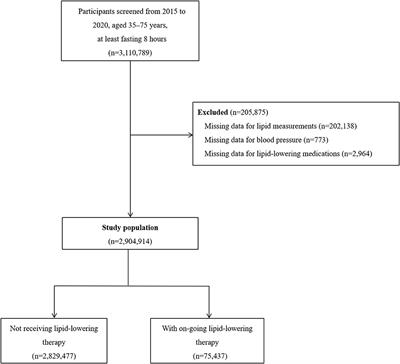
Atherosclerotic Cardiovascular Disease Risk and Lipid-Lowering Therapy Requirement in China

Atherosclerotic Cardiovascular Disease Risk and Lipid-Lowering Therapy Requirement in China

Source : https://www.frontiersin.org/articles/10.3389/fcvm.2022.839571/full

BackgroundLipid-lowering therapy (LLT) is one of the key strategies for reducing the atherosclerotic cardiovascular disease (ASCVD) burden. However, little is known about the percentage of people in need of different...


Conclusions: Moderate-intensity statin therapy is pivotal for the attainment of optimal LDL-C goals in China, and around 10–25% of high- or very-high-risk patients would require additional non-statin agents. There is an opportunity to reduce the rising ASCVD burden in China by optimizing LLT.


Profile Image
  • Saved
Motivating cascade testing for familial hypercholesterolemia: applying the extended parallel process model for clinician communication - PubMed

Motivating cascade testing for familial hypercholesterolemia: applying the extended parallel process model for clinician communication - PubMed

Source : https://pubmed.ncbi.nlm.nih.gov/35429393/

Motivating at-risk relatives to undergo cascade testing for familial hypercholesterolemia (FH) is critical for diagnosis and lifesaving treatment. As credible sources of information, clinicians can assist in family communication about...


Conclusion/Relevance: Guided by the extended parallel process model (EPPM), we analyzed the perspectives of individuals and families with FH for effective messaging clinicians can use to promote cascade testing uptake. We analyzed narrative data from interviews and surveys collected as part of a larger mixed-methods study. The EPPM was used to...

Profile Image
  • Saved
Latest clinical evidence about the effect of PCSK9 monoclonal antibodies in patients with familial hypercholesterolaemia: an updated meta-analysis | Zhang | Endokrynologia Polska

Latest clinical evidence about the effect of PCSK9 monoclonal antibodies in patients with familial hypercholesterolaemia: an updated meta-analysis | Zhang | Endokrynologia Polska

Source : https://journals.viamedica.pl/endokrynologia_polska/article/view/84675

Early publication date: 2022-02-14 Qiongfang Zhang 1, Lianxiang Deng 1, Cong Chen 1, Xu Pan 1, Shan Jiang 1 DOI: 10.5603/EP.a2021.0109 Endokrynol Pol 2022;73(1):110-120. The Second People's Hospital of Nanning,...


Conclusions: Overall, PSCK9 mAbs are an effective and safe method of LDL-C reduction in patients with FH.

Profile Image
  • Saved
The Role of Non-statin Lipid-Lowering Medications in Youth with Hypercholesterolemia - Current Atherosclerosis Reports

The Role of Non-statin Lipid-Lowering Medications in Youth with Hypercholesterolemia - Current Atherosclerosis Reports

Source : https://link.springer.com/article/10.1007/s11883-022-01013-x

Purpose of Review Lifestyle modification is additive to lipid-lowering medications in the treatment of heterozygous familial hypercholesterolemia (HeFH), which does not respond sufficiently to statin therapy. While both are also...


Summary: Approvals for PCSK9 and ANGPTL3 inhibitors have expanded opportunities for children and adolescents with HeFH and HoFH to achieve lower LDL-C levels.

Profile Image
  • Saved
Exploring rates of PCSK9 inhibitor persistence and reasons for treatment non-persistence in an integrated specialty pharmacy model - PubMed

Exploring rates of PCSK9 inhibitor persistence and reasons for treatment non-persistence in an integrated specialty pharmacy model - PubMed

Source : https://pubmed.ncbi.nlm.nih.gov/35367164/

1 Specialty Pharmacy Services, Vanderbilt University Medical Center, 726 Melrose Avenue Nashville, TN 37211, United States. Electronic address: [email protected]. 2 Specialty Pharmacy Services, Vanderbilt University Medical Center, 726 Melrose Avenue...


Conclusions: High rates of persistence to PCSK9i were seen in patients receiving care within an integrated specialty pharmacy model compared with rates in previous studies, suggesting specialty pharmacists may play a role in mitigating many common reasons for PCSK9i non-persistence.

Profile Image
  • Saved
Treatment of Homozygous Familial Hypercholesterolemia With Evinacumab - PubMed

Treatment of Homozygous Familial Hypercholesterolemia With Evinacumab - PubMed

Source : https://pubmed.ncbi.nlm.nih.gov/35386132/

2021 Nov 29;4(3):347-349. doi: 10.1016/j.cjco.2021.11.009. 1 Department of Medicine, Schulich School of Medicine and Dentistry, Western University, London, Ontario, Canada. 2 Robarts Research Institute, Schulich School of Medicine and Dentistry,...


Conclusion/Relevance: We describe an Ontario patient with HoFH who for 17 months has been treated with monthly infusions of evinacumab added to pre-existing statin, ezetimibe, and evolocumab therapy. Evinacumab in this HoFH patient was associated with markedly improved LDL-C levels and decreased frequency of apheresis.

Profile Image
  • Saved
Combining familial hypercholesterolemia and statin genetic studies as a strategy for the implementation of pharmacogenomics. A multidisciplinary approach - The Pharmacogenomics Journal

Combining familial hypercholesterolemia and statin genetic studies as a strategy for the implementation of pharmacogenomics. A multidisciplinary approach - The Pharmacogenomics Journal

Source : https://www.nature.com/articles/s41397-022-00274-8

The diagnostic process of familial hypercholesterolemia frequently involves the use of genetic studies. Patients are treated with lipid-lowering drugs, frequently statins. Although pharmacogenomic clinical practice guidelines focusing on genotype-based statin...


Conclusion: This implementation approach facilitates the incorporation of pharmacogenomic studies in clinical care practice, it does not add complexity nor additional steps to laboratory processes, and improves the pharmacotherapeutic process of patients.

Profile Image
  • Saved
Reduced cardiovascular risks in women with endometriosis or polycystic ovary syndrome carrying a common functional IGF1R variant - PubMed

Reduced cardiovascular risks in women with endometriosis or polycystic ovary syndrome carrying a common functional IGF1R variant - PubMed

Source : https://pubmed.ncbi.nlm.nih.gov/35362533/

doi: 10.1093/humrep/deac059. Online ahead of print. 1 Buck Institute for Research on Aging, Novato, CA, USA. 2 Graduate Group in Biostatistics, University of California, Berkeley, School of Public Health, Berkeley,...


Relevance: These findings implicate systemic dysregulation of the insulin-like growth factor-1 axis in the development of HTN, HC and clinical CVD in endometriosis and PCOS, suggesting a common underlying pathogenetic mechanism.

Profile Image
  • Saved
Identification of dominant conformational epitopes from the whole structure of the proprotein convertase subtilisin/kexin type 9 - PubMed

Identification of dominant conformational epitopes from the whole structure of the proprotein convertase subtilisin/kexin type 9 - PubMed

Source : https://pubmed.ncbi.nlm.nih.gov/35339752/

Proprotein convertase subtilisin/kexin type 9 (PCSK9), a negative regulator of LDLR, has emerged as an important target for the treatment of hypercholesterolemic cardiovascular disease, and monoclonal antibodies alirocumab and evolocumab...


Conclusion: We performed in vitro recombination design on the dominant sequences, and obtained recombinant sequences that can respond to the dominant conformational epitope of PCSK9, which provides a meaningful reference for epitope selection in subsequent PCSK9 vaccine development.

Profile Image
  • Saved
Bile Acid Sequestrants for Hypercholesterolemia Treatment Using Sustainable Biopolymers: Recent Advances and Future Perspectives - PubMed

Bile Acid Sequestrants for Hypercholesterolemia Treatment Using Sustainable Biopolymers: Recent Advances and Future Perspectives - PubMed

Source : https://pubmed.ncbi.nlm.nih.gov/35333534/

Bile acids, the endogenous steroid nucleus containing signaling molecules, are responsible for the regulation of multiple metabolic processes, including lipoprotein and glucose metabolism to maintain homeostasis.


Conclusion: Due to higher daily dosage requirements, lower efficacy in LDL-C reduction, and concomitant drug malabsorption, research to develop an "ideal" BAS from sustainable or natural sources with better LDL-C lowering efficacy and glucose regulations and lower side effects is being pursued. This Review discusses some recent developments...

Profile Image
  • Saved
Low testosterone and high cholesterol levels in relation to all-cause, cardiovascular disease, and cancer mortality in White, Black, and Hispanic men: NHANES 1988-2015 - Hormones

Low testosterone and high cholesterol levels in relation to all-cause, cardiovascular disease, and cancer mortality in White, Black, and Hispanic men: NHANES 1988-2015 - Hormones

Source : https://link.springer.com/article/10.1007/s42000-022-00360-3

Purpose The role of testosterone (T) deficiency (T ≤ 300 ng/dL) and hypercholesterolemia (total cholesterol ≥ 240 mg/dL) in the risk of all-cause cardiovascular diseases (CVD) and cancer mortality among a nationally representative sample...


Conclusion: Hypercholesterolemia was inversely associated with cancer mortality. However, higher levels of T were positively associated with CVD mortality among NHW and were inversely associated with CVD mortality among NHB and Hispanic men. Larger prospective studies are warranted to clarify the underlying relationship between T and...

Profile Image
  • Saved
Insight into the Evolving Role of PCSK9 - PubMed

Insight into the Evolving Role of PCSK9 - PubMed

Source : https://pubmed.ncbi.nlm.nih.gov/35323699/

Proprotein convertase subtilisin/kexin type 9 (PCSK9) is the last discovered member of the family of proprotein convertases (PCs), mainly synthetized in hepatic cells. This serine protease plays a pivotal role...


Conclusion/Relevance: In this article, we summarize the current knowledge on the roles that PCSK9 plays in different tissues and perspectives for its clinical use.

Profile Image
  • Saved
PCSK9 Inhibitors in Real-world Practice: Analysis of Data from 314 Patients and 2 Years of Experience in a Center of Preventive Cardiology - Current Atherosclerosis Reports

PCSK9 Inhibitors in Real-world Practice: Analysis of Data from 314 Patients and 2 Years of Experience in a Center of Preventive Cardiology - Current Atherosclerosis Reports

Source : https://link.springer.com/article/10.1007/s11883-022-01008-8

Purpose of Review PCSK9 inhibitors have been shown to be the most effective class of drugs modifying the levels of LDL-cholesterol as the main risk factor for atherosclerotic cardiovascular disease....


Conclusion: Even in real-world practice, PCSK9 inhibitors have been shown to be an effective, safe, and well-tolerated class of drugs with effects comparable with those reported from large randomized controlled trials.

Profile Image