

Low dose statins improve prognosis of ischemic stroke patients with intravenous thrombolysis - BMC Neurology
Source : https://bmcneurol.biomedcentral.com/articles/10.1186/s12883-021-02259-9
Background For acute ischaemic stroke patients, it is uncertain whether intravenous thrombolysis combined with statins might increase the therapeutic effect. Additionally, using high-intensity statins after thrombolysis may increase the risk...
Conclusion: For acute ischaemic stroke patients after intravenous thrombolysis, the use of low-dose statins was related to NIHSS improvement at 7 days and inversely related to haemorrhage events in the hospital and death events within 2 years, especially for moderate stroke or noncardioembolic stroke patients.
Share





Genetic variants in SLC22A1 are related to serum lipid levels in Mexican women - PubMed
Source : https://pubmed.ncbi.nlm.nih.gov/34927264/
doi: 10.1002/lipd.12334. Online ahead of print. 1 Laboratorio en Epidemiología Clínica y Molecular, Facultad de Ciencias Químico-Biológicas, Universidad Autónoma de Guerrero, Chilpancingo, Mexico. 2 Unidad de Investigación Médica en Bioquímica,...
We identified a significant increase in total cholesterol and LDL-c levels in women who were carriers of the GA and AG genotypes of the polymorphisms rs628031 and rs594709, respectively, significant effect that is also shown in a dominant inheritance model. Interestingly, we identified an important relationship of the AGC-GAT haplotype with the...
Share
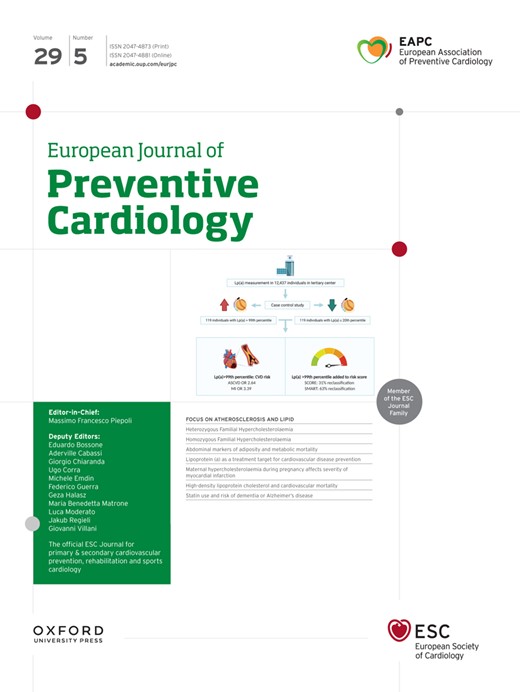
Statins and lipoprotein(a); facing the residual risk
Source : https://academic.oup.com/eurjpc/advance-article/doi/10.1093/eurjpc/zwab178/6460620?login=true
This editorial refers to 'Statin therapy and lipoprotein(a) levels: a systematic review and meta-analysis', by L.M. de Boer et al. doi: 10.1093/eurjpc/zwab171. Atherosclerosis is the leading cause of cardiovascular diseases,...
As a significant and highly potent pharmaceutical intervention to reduce LDL-c and diminish long-term cardiovascular risk, statin therapy is essential for patients with increased LDL-c levels and above moderate cardiovascular risk. Thus, statins should remain the backbone for treating such patients, and, in parallel, the preventive strategy...
Share
-
 Dr Hamid4yrpatients with increased Lp(a), other modifiable risk factors should be aggressively treated and controlled

Comparison of Fasting Plasma Glucose, Lipid Profile and Small Dense Low Density Lipoprotein in Severe Persistent Asthmatic and Non-Asthmatic Adults
Source : https://jbas.juw.edu.pk/index.php/JBAS/article/view/394
Haji Muhammad Rashid Department of Chemical Pathology, University of Health Sciences, Lahore, Pakistan. Nadia Aawan Department of Chemical Pathology, University of Health Sciences, Lahore, Pakistan. Hiza Hassan Department of Medical...
Conclusion: Dyslipidaemia, hyperglycaemia and elevated levels of Sd-LDL-C are associated complication of severe persistent asthma and high levels of Sd-LDL-C in severe persistent asthma are a potential risk factor to induce atherosclerosis.
Share
-
Dr Hamid4yrInteresting study as Studies of blood glucose and lipid profiles in relation to severe persistent asthma are still a few, and the results are ambiguous.
Highlights: "•Recent major clinical trials for lipid lowering therapy emphasize ‘lower the better’ concept in low density lipoprotein.•Optimal target low density lipoprotein cholesterol level is not fully investigated in Korean acute myocardial infarction•Target low density lipoprotein cholesterol levels of
Share