
Menopause Connect
Profile Image
  • Saved

made a Post

Treating Vasomotor Menopause Symptoms

Eighty percent (80%) of women aged 40-65 years reported having vasomotor menopausal symptoms (VMS) according to a survey of 4,754 women published in Menopause, The Journal of The North American Menopause Society. Vasomotor menopausal symptoms include hot flashes and night sweats or cold sweats. Insomnia, irritability, and trouble concentrating are additional symptoms often cited by patients.

Fifty-five percent (55%) of the surveyed women reported their vasomotor symptoms as moderate to severe, and more than half of these women were untreated. VMS has a substantial negative impact on women’s personal and professional lives, which increases with the severity of symptoms.

While hormone therapy is still widely used to treat VMS, there continue to be concerns about risks of venous thromboembolism, stroke, and breast cancer. According to the women surveyed, ~35% were hormone therapy-contraindicated and ~50% were hormone-therapy cautious or averse.

Have you seen similar statistics in your practice? What have you found to be successful in treating VMS with patients who are HRT-contraindicated or averse?

Profile Image
  • 3yr
    Since I am a Psych NP, I mainly use SSRI's and SNRI's which are somewhat effective for some. The numbers do seem similar to what I see.
  • 3yr
    Numerous studies have shown the strong correlation between VMS and endothelial dysfunction and increase rate of heart disease. I strongly disagree with treating symptoms.

Show More Comments

  • Saved

made a Post

Treating Vasomotor Menopause Symptoms

Eighty percent (80%) of women aged 40-65 years reported having vasomotor menopausal symptoms (VMS) according to a survey of 4,754 women published in Menopause, The Journal of The North American Menopause Society. Vasomotor menopausal symptoms include hot flashes and night sweats or cold sweats. Insomnia, irritability, and trouble concentrating are additional symptoms often cited by patients.

Fifty-five percent (55%) of the surveyed women reported their vasomotor symptoms as moderate to severe, and more than half of these women were untreated. VMS has a substantial negative impact on women’s personal and professional lives, which increases with the severity of symptoms.

While hormone therapy is still widely used to treat VMS, there continue to be concerns about risks of venous thromboembolism, stroke, and breast cancer. According to the women surveyed, ~35% were hormone therapy-contraindicated and ~50% were hormone-therapy cautious or averse.

Have you seen similar statistics in your practice? What have you found to be successful in treating VMS with patients who are HRT-contraindicated or averse?

Profile Image
  • 3yr
    Since I am a Psych NP, I mainly use SSRI's and SNRI's which are somewhat effective for some. The numbers do seem similar to what I see.
  • 3yr
    Numerous studies have shown the strong correlation between VMS and endothelial dysfunction and increase rate of heart disease. I strongly disagree with treating symptoms.
Show More Comments

  • Saved

made a Post

Treating Vasomotor Menopause Symptoms

Eighty percent (80%) of women aged 40-65 years reported having vasomotor menopausal symptoms (VMS) according to a survey of 4,754 women published in Menopause, The Journal of The North American Menopause Society. Vasomotor menopausal symptoms include hot flashes and night sweats or cold sweats. Insomnia, irritability, and trouble concentrating are additional symptoms often cited by patients.

Fifty-five percent (55%) of the surveyed women reported their vasomotor symptoms as moderate to severe, and more than half of these women were untreated. VMS has a substantial negative impact on women’s personal and professional lives, which increases with the severity of symptoms.

While hormone therapy is still widely used to treat VMS, there continue to be concerns about risks of venous thromboembolism, stroke, and breast cancer. According to the women surveyed, ~35% were hormone therapy-contraindicated and ~50% were hormone-therapy cautious or averse.

Have you seen similar statistics in your practice? What have you found to be successful in treating VMS with patients who are HRT-contraindicated or averse?

Profile Image
  • 3yr
    Since I am a Psych NP, I mainly use SSRI's and SNRI's which are somewhat effective for some. The numbers do seem similar to what I see.
  • 3yr
    Numerous studies have shown the strong correlation between VMS and endothelial dysfunction and increase rate of heart disease. I strongly disagree with treating symptoms.
Show More Comments

  • Saved
Women with Schizophrenia-Spectrum Disorders After Menopause: A Vulnerable Group for Relapse - PubMed

Women with Schizophrenia-Spectrum Disorders After Menopause: A Vulnerable Group for Relapse - PubMed

Source : https://pubmed.ncbi.nlm.nih.gov/36198044/

While younger women have a lower risk of relapse and generally need a lower antipsychotic dose to prevent rehospitalization than men, antipsychotic effectiveness declines in women after the age of...


Conclusion: While younger women have a lower risk of relapse and generally need a lower antipsychotic dose to prevent rehospitalization than men, antipsychotic effectiveness declines in women after the age of 45. Starting in mid-forties, older women with SSD should be regarded as a vulnerable group that deserve special attention.

Profile Image
  • Saved
The clinical management of testosterone replacement therapy in postmenopausal women with hypoactive sexual desire disorder: a review - International Journal of Impotence Research

The clinical management of testosterone replacement therapy in postmenopausal women with hypoactive sexual desire disorder: a review - International Journal of Impotence Research

Source : https://www.nature.com/articles/s41443-022-00613-0

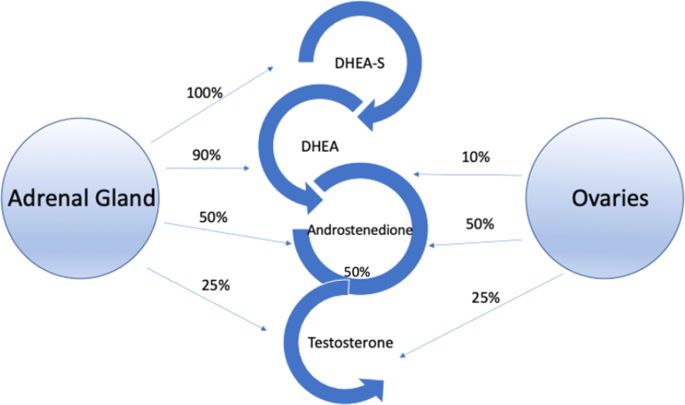
As women age, there is an overall decrease in androgen production due to decline of ovarian and adrenal function during menopause. Androgens have been demonstrated to play an important role...


Conclusion: TRT is an effective treatment option for postmenopausal people with HSDD as testosterone is vital to sexual function and health. There is still limited data on the effectiveness in premenopausal people with HSDD.

Profile Image
  • Saved
Evaluation of atherosclerosis-related biomarkers during perimenopause: A prospective cohort study in women with endometriosis - PubMed

Evaluation of atherosclerosis-related biomarkers during perimenopause: A prospective cohort study in women with endometriosis - PubMed

Source : https://pubmed.ncbi.nlm.nih.gov/36168257/

doi: 10.1111/jog.15447. Online ahead of print. 1 Department of Obstetrics and Gynecology, The University of Tokyo, Tokyo, Japan. 2 Department of Preventive Medicine for Locomotive Organ Disorders, 22nd Century Medical...


Conclusion: The association between CAVI and serum markers related to lipid metabolism and ovarian function was mild. Longitudinal analysis of CAVI showed an association with pentosidine, which may be helpful in assessing atherosclerosis risk in women with endometriosis during perimenopause.

Profile Image
  • Saved
Cardiovascular Disease in Women: Does Menopause Matter?

Cardiovascular Disease in Women: Does Menopause Matter?

Source : https://www.sciencedirect.com/science/article/abs/pii/S2451965022001041

Available online 6 October 2022, 100419 It is known that the menopause transition (MT) is a complex period during a woman's life, but there has been ongoing debate on whether...


Discussion: The accumulated data support incorporating menopause-related factors as important components of CVD risk assessment in clinical practice of midlife women.

Profile Image
  • Saved

made a Post

Preview of the 2022 North American Menopause Society Annual Meeting

This year’s North American Menopause Society (NAMS) four-day annual meeting is being held at the Hyatt Regency in Atlanta from Oct. 12 to 15, 2022. The theme of this year’s meeting is Menopause Science and Care—An Inclusive Perspective.

The mission of NAMS is to promote health and quality of life for women during midlife and beyond through an understanding of menopause and healthy aging. Members include obstetricians-gynecologists, primary care practitioners, nurse practitioners, and physician assistants. Click above for a detailed preview of the event.

Profile Image
  • Saved

made a Post

Preview of the 2022 North American Menopause Society Annual Meeting

This year’s North American Menopause Society (NAMS) four-day annual meeting is being held at the Hyatt Regency in Atlanta from Oct. 12 to 15, 2022. The theme of this year’s meeting is Menopause Science and Care—An Inclusive Perspective.

The mission of NAMS is to promote health and quality of life for women during midlife and beyond through an understanding of menopause and healthy aging. Members include obstetricians-gynecologists, primary care practitioners, nurse practitioners, and physician assistants. Click above for a detailed preview of the event.

Profile Image
  • Saved

made a Post

Preview of the 2022 North American Menopause Society Annual Meeting

This year’s North American Menopause Society (NAMS) four-day annual meeting is being held at the Hyatt Regency in Atlanta from Oct. 12 to 15, 2022. The theme of this year’s meeting is Menopause Science and Care—An Inclusive Perspective.

The mission of NAMS is to promote health and quality of life for women during midlife and beyond through an understanding of menopause and healthy aging. Members include obstetricians-gynecologists, primary care practitioners, nurse practitioners, and physician assistants. Click above for a detailed preview of the event.

Profile Image
  • Saved

made a Post

Preview of the 2022 North American Menopause Society Annual Meeting

This year’s North American Menopause Society (NAMS) four-day annual meeting is being held at the Hyatt Regency in Atlanta from Oct. 12 to 15, 2022. The theme of this year’s meeting is Menopause Science and Care—An Inclusive Perspective.

The mission of NAMS is to promote health and quality of life for women during midlife and beyond through an understanding of menopause and healthy aging. Members include obstetricians-gynecologists, primary care practitioners, nurse practitioners, and physician assistants. Click above for a detailed preview of the event.

Profile Image
  • Saved
Factors Influencing Skin Aging and the Important Role of Estrogens and Selective Estrogen Receptor Modulators (SERMs)

Factors Influencing Skin Aging and the Important Role of Estrogens and Selective Estrogen Receptor Modulators (SERMs)

Source : https://www.dovepress.com/factors-influencing-skin-aging-and-the-important-role-of-estrogens-and-peer-reviewed-fulltext-article-CCID

For many years, it has been recognized that estrogens are important in the maintenance of human skin. Women seek cosmetic and medical treatments to improve dermal health and physical characteristics...


Discussion: Estrogens are paramount in maintaining dermal health and have many anti-aging characteristics by binding to estrogen receptors in the skin. Especially where skin collagen and elastin profiles are known to follow 17β-estradiol levels during aging and at/after menopause.

Profile Image
  • Saved
Limited evidence of a threshold effect for increasing adiposity on risk of symptoms at midlife - PubMed

Limited evidence of a threshold effect for increasing adiposity on risk of symptoms at midlife - PubMed

Source : https://pubmed.ncbi.nlm.nih.gov/36166728/

doi: 10.1097/GME.0000000000002074. Online ahead of print. 1 From the Department of Anthropology, University of Massachusetts Amherst, Amherst, MA. 2 Department of Biostatistics and Epidemiology, University of Massachusetts Amherst, Amherst, MA....


Conclusion: Even at very high levels of BMI, likelihood of urinary incontinence and shortness of breath increases with BMI. In contrast, likelihood of aches/stiffness has a nonlinear relationship with BMI, increasing to a threshold level.

Profile Image
  • Saved
The Potential Role of Serum IGF-1 and Leptin as Biomarkers: Towards Screening for and Diagnosing Postmenopausal Osteoporosis

The Potential Role of Serum IGF-1 and Leptin as Biomarkers: Towards Screening for and Diagnosing Postmenopausal Osteoporosis

Source : https://www.dovepress.com/the-potential-role-of-serum-igf-1-and-leptin-as-biomarkers-towards-scr-peer-reviewed-fulltext-article-JIR

Postmenopausal osteoporosis (PMOP) is a common type of osteoporosis (OP), which is a condition affecting approximately 33% women over 60yr in China. Estrogen is an essential element in the bone...


Conclusion: IFG-1 and leptin seem to be key biomarker associated with PMOP in this study. The high prevalence of PMOP makes these cytokines with highly attractive in clinical practice. Although we did not perform longitudinal assessments, IGF-1 and leptin might bear the potential of becoming a very useful screening test also for clinical...

Profile Image
  • Saved

Surgical Menopause and Bilateral Oophorectomy: Effect of Estrogen-Progesterone and Testosterone Replacement Therapy on Psychological Well-being and Sexual Functioning; A Systematic Literature Review

Source : https://www.jsm.jsexmed.org/article/S1743-6095(22)01769-6/fulltext

Menopause can cause a variety of vasomotor, psychological, and sexual symptoms., , After a bilateral salpingo-oophorectomy at premenopausal age, eg, for reducing ovarian cancer risk or for removing benign disease,...


Conclusion: Independent randomized controlled clinical trials investigating the effects of estrogen-progesterone and testosterone on psychological and sexual symptoms after surgical menopause are needed.

Profile Image
  • Saved

Early menopause and epigenetic biomarkers of ageing

Source : https://www.rbmojournal.com/article/S1472-6483(22)00710-6/fulltext

We read with interest Professor Laven's recent Countercurrent contribution stating that early menopause is a result of premature general ageing (Laven, 2022). In our opinion, his position is anything but...


Discussion: Currently available epigenetic clocks express the epigenetic age of individuals in contrast to their chronological age. These epigenetic biomarkers of ageing have proven themselves as compelling predictors of age-related conditions such as the cardiovascular disease.

Profile Image
  • Saved
Mildly elevated diastolic blood pressure increases subsequent risk of breast cancer in postmenopausal women in the Health Examinees-Gem study - Scientific Reports

Mildly elevated diastolic blood pressure increases subsequent risk of breast cancer in postmenopausal women in the Health Examinees-Gem study - Scientific Reports

Source : https://www.nature.com/articles/s41598-022-19705-4

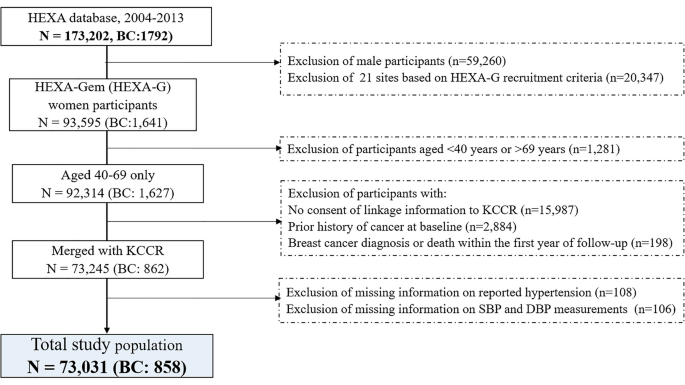
Epidemiological evidence suggests that hypertension is associated with breast cancer risk. However, previous studies disregard blood pressure components in the healthy population. We aimed to examine the relationship between systolic...


Conclusion: In summary, this study suggests that normal-high DBP values are associated with increased BC risk in postmenopausal women. We propose that mildly elevated DBP values are associated with an increased probability of BC, but they are not necessarily causal factors. Still, DBP could be used for the risk calculation of BC occurrence. Our...

Profile Image
  • Saved


Discussion: In this systematic review and meta-analysis of 270 women from 6 RCTs, vaginal laser therapy vs vaginal estrogen treatment had similar improvement in VAS, VHI, VMI, and FSFI scores. Although the symptoms of GSM were negatively associated with quality of life and mental health, the Women’s EMPOWER survey suggested that only 50% of...

Profile Image
  • Saved

Profile Image
  • Saved
The Development of a Physical Therapy Service to treat Urinary Incontinence: Results of a RE-AIM Evaluation

The Development of a Physical Therapy Service to treat Urinary Incontinence: Results of a RE-AIM Evaluation

Source : https://www.frontiersin.org/articles/10.3389/fgwh.2022.1004140/abstract

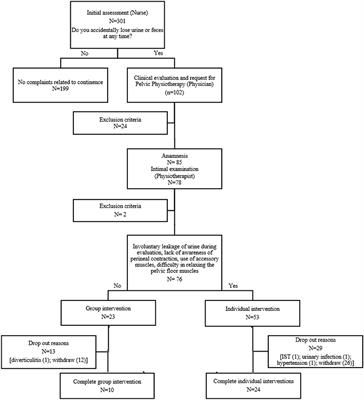
Background: A conservative physiotherapy service development addressed to treat urinary incontinence for older women was studied using the RE-AIM (reach, effectiveness, adoption, implementation, and maintenance) framework. Design: We conducted a...


Conclusion: Our findings demonstrate that UI patients would benefit from physiotherapy treatment and that this intervention is feasible. This RE-AIM evaluation provides lessons learned and strategies for future adoption, implementation, and maintenance of a Physical Therapy pelvic service.

Profile Image