


Association between baseline serum uric acid and development of LDL-C level in patients with first acute myocardial infarction - BMC Cardiovascular Disorders
Source : https://bmccardiovascdisord.biomedcentral.com/articles/10.1186/s12872-021-02383-x
Background Data on the relationship of baseline serum uric acid (SUA) with development of low-density lipoprotein cholesterol (LDL-C) level in patients with first acute myocardial infarction (AMI) are limited. The...
Conclusion: "Among Chinese patients with first AMI, higher baseline SUA was associated with higher LDL-C deduction percentage (%), and higher rate of LDL-C control in the short-term follow-up, respectively. SUA acquired when AMI occurred was prone to be profitable in predicting the risk stratification of uncontrolled LDL-C and dyslipidemia...
Share




-
 Lipid Management Connect4yrKey Points • Source: BMC Cardiovascular Disorders • Conclusions: “Among Chinese patients with first AMI, higher baseline SUA was associated with higher LDL-C deduction percentage (%), and higher rate of LDL-C control in the Show More

Association Between Lipid Trajectories During Pregnancy and Risk of Postpartum Glucose Intolerance After Gestational Diabetes Mellitus: A Cohort Study
Source : https://doi.org/10.21203/rs.3.rs-1118681/v1
This is a preprint, a preliminary version of a manuscript that has not completed peer review at a journal. Research Square does not conduct peer review prior to posting preprints....
Conclusions: The high trajectory of LDL-C during pregnancy may play a protective role on postpartum glucose intolerance in women with GDM. Further studies are warranted to explore the underlying mechanism.
Share
Conclusion: "LDL-C testing is recommended for patients with a history of ASCVD and may be a high-value and low-cost intervention to improve adherence and statin management."
Share

Prognostic Significance of Visit-To-Visit Variability, Maximum and Minimum LDL Cholesterol in Diabetes Mellitus
Source : https://doi.org/10.21203/rs.3.rs-1102811/v1
BACKGROUND Current guidelines for dyslipidemia management recommended that the LDL_C goal could be lower to less than 70 mg/dL. The present study was to investigate the prognostic significance of the...
Conclusions: Visit-to-visit variability in LDL_C was a strong predictor of outcomes, independent of mean LDL_C. Patients with LDL_C be controlled to less than 70 mg/dl at least once during follow-up might have a benign prognosis.
Share
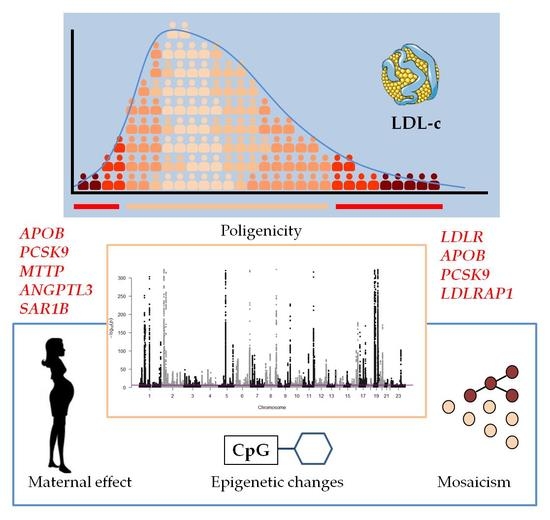
Genetic Determinants of Plasma Low-Density Lipoprotein Cholesterol Levels: Monogenicity, Polygenicity, and "Missing" Heritability
Source : https://www.mdpi.com/2227-9059/9/11/1728
Changes in plasma low-density lipoprotein cholesterol (LDL-c) levels relate to a high risk of developing some common and complex diseases. LDL-c, as a quantitative trait, is multifactorial and depends on...
This paper discusses other possibilities for unexplained dyslipidemias associated with LDL-c, such as mosaicism, maternal effect, and induced epigenetic changes. Future studies should consider gene–gene and gene–environment interactions and the development of integrated information about disease-driving networks, including phenotypes,...
Share
-
Lipid Management Connect4yrKey Points • Source: Biomedicines • Conclusion/Relevance: “This paper discusses other possibilities for unexplained dyslipidemias associated with LDL-c, such as mosaicism, maternal effect, and induced epigenetic changes. Future studies should consider gene–gene and gene–environment Show More